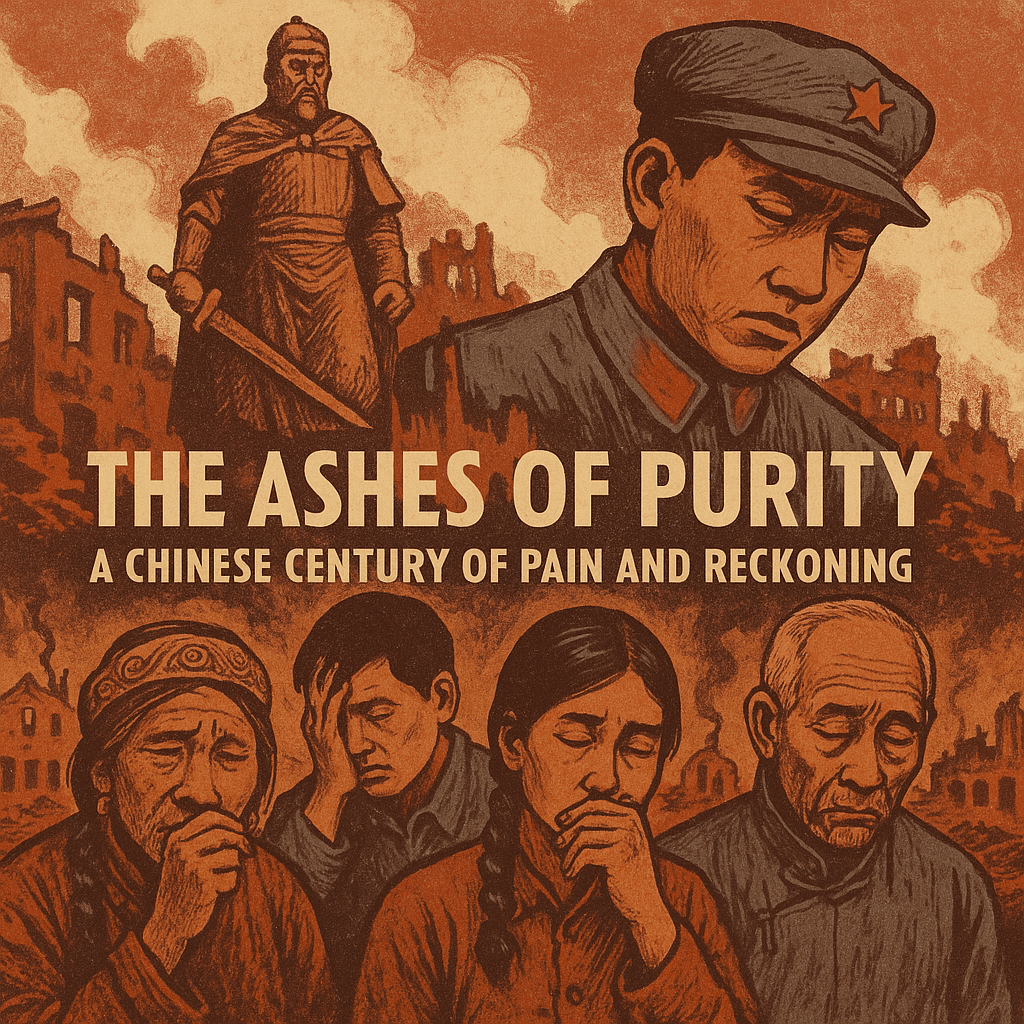
In our world, the year 1911 marked the end of centuries of imperial rule. The Qing dynasty fell to revolution, and in its place, the Republic of China was born—guided by Sun Yat-sen’s vision of unity, democracy, and nationalism. It was a turbulent beginning, but one that sought to reconcile China’s past with the ideals of a modern future.
But in this alternate timeline, the revolution still comes—only it takes a different shape. The Qing dynasty collapses, as it did in our reality. Yet it is not Sun Yat-sen who rises in the vacuum, but Zhang Binglin, a firebrand scholar and fierce cultural nationalist. Sun is sidelined, his republican ideals drowned out by a deeper cry—not for democracy, but for purity.
Thus begins the age of Huanghanism (皇汉主义), a movement born from historical grievance, fear of fragmentation, and a relentless yearning for a singular Han identity. What starts as a reclamation of pride and resistance to past humiliations soon mutates into a dangerous pursuit of ethnic and cultural “purification.” In Zhang’s new regime, diversity is no longer celebrated—it is something to be erased, managed, mourned.
The tragedy of this world is not only political, but deeply human. The dream of a stronger China remains—but it comes at the cost of its plural soul. Minorities are silenced. Monuments to shared heritage fall. Even those who once fought for justice find themselves complicit in its betrayal.
This is not a triumphant tale. It is a slow-burning reckoning with memory, identity, and the terrible weight of revenge disguised as rebirth. The empire may have ended—but in the name of rebuilding, something sacred was lost.
 What If: The Archive
Leave a comment