The secret of Queen Elizabeth II’s wartime pregnancy, long buried by the British establishment, does not remain hidden forever. In the late 1950s and early 1960s, the slow unraveling of this scandal shakes the monarchy, strains the Anglo-American alliance, and alters the course of Cold War geopolitics.
1955–1959: Whispers Turn to Rumors
By the mid-1950s, Britain is undergoing profound transformation. The Suez Crisis of 1956 humiliates the British government, accelerating the empire’s decline. Amidst this turmoil, an unexpected political scandal begins to emerge—one that threatens the monarchy itself.
- Intelligence Leaks – Former MI5 and CIA operatives, disgruntled with government secrecy, begin leaking classified files to journalists. Among them are documents hinting at a “high-level cover-up” in 1944 involving Eisenhower and a member of the royal family.
- American Sensationalism – In 1958, a minor American tabloid publishes a speculative article claiming that Queen Elizabeth had an affair with Eisenhower during WWII. While dismissed as gossip, the claim finds its way into elite circles.
- A Man in the Shadows – The secret child, now a 14-year-old boy, is living quietly in Canada under a false identity. But as whispers of the scandal spread, he begins to suspect that he is not who he was told he was.
The British establishment works desperately to contain the story. Prime Minister Harold Macmillan, a staunch royalist, pressures the press into silence, while MI5 ensures that anyone probing too deeply meets bureaucratic roadblocks.
However, Britain is no longer an empire where the monarchy’s will is absolute. In an era of growing political transparency, the secret cannot be kept much longer.
1960–1962: The Revelation
The breaking point comes in 1960. An investigative journalist, perhaps from The Times or the Sunday Mirror, uncovers irrefutable evidence:
- A birth certificate listing an unnamed mother and American father.
- Personal testimonies from former palace staff who saw Elizabeth’s “illness” in 1944.
- A classified MI5 file confirming the cover-up.
When the journalist publishes the findings, the world erupts in shock. For the first time in modern history, a reigning British monarch is embroiled in a full-blown legitimacy crisis.
Immediate Reactions:
- Buckingham Palace Issues a Denial – The Queen refuses to acknowledge the claim, calling it “a cruel fabrication.” However, her refusal to give a straight answer fuels suspicion.
- Eisenhower’s Response (Privately and Publicly) – The former U.S. president, now retired, is confronted by the press. Initially, he dismisses the claims, but in private, he begins to fear the truth may surface.
- The Boy’s Identity Becomes Public – The media tracks down the now 16-year-old young man in Canada. His name? David Windsor-Smith, a name he was given to obscure his royal origins.
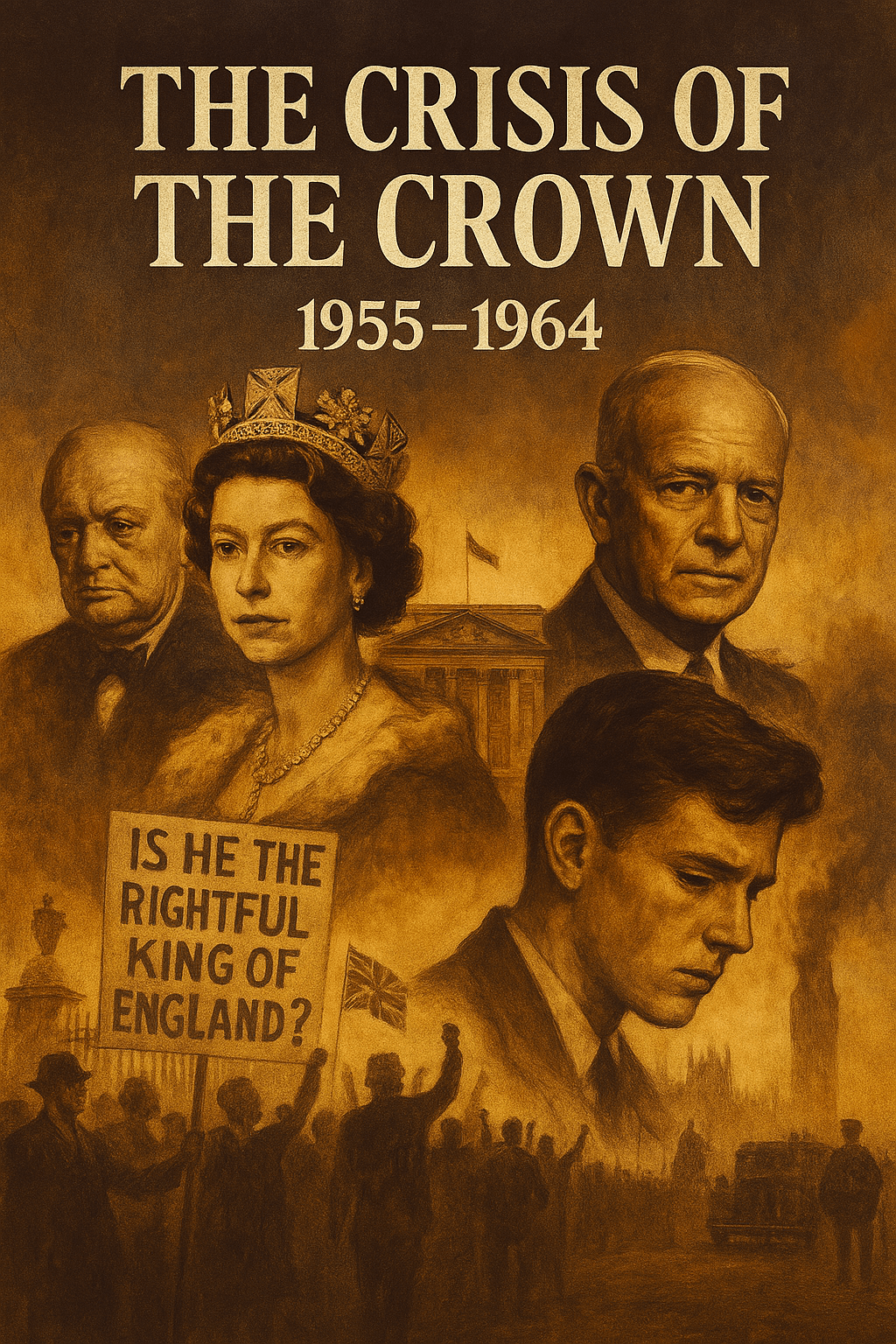
Is he the rightful King of England?
1963–1964: Britain’s Constitutional Crisis
With David Windsor-Smith’s identity exposed, Britain faces its worst constitutional crisis since Edward VIII’s abdication. The nation splits into factions:
- Royalists defend Queen Elizabeth II, claiming the affair never happened or that it is irrelevant.
- Republicans argue that the monarchy is tainted and outdated, demanding a full transition to a parliamentary republic.
- Legal scholars debate David’s claim—is an illegitimate child of the Queen, born before her marriage, a viable heir to the throne?
Prime Minister Harold Macmillan Resigns (1963)
The strain of defending the monarchy proves too much for Macmillan, who resigns in October 1963. His successor, Alec Douglas-Home, lacks the political weight to handle the crisis, leading to Labour’s landslide victory in 1964 under Harold Wilson.
The Queen’s Final Gamble
Facing mounting pressure, Queen Elizabeth II agrees to meet David Windsor-Smith in secret. The young man, now a poised and intelligent 18-year-old, demands formal recognition of his lineage. But the Queen refuses to acknowledge him as a legitimate heir.
In early 1964, David does the unthinkable—he publicly announces his intent to claim his birthright.
Does Britain remain a monarchy?
 What If: The Archive
Leave a comment