In the twilight of the Second World War, as the world splintered into ideological camps, the Cold War drew its first sharp lines not just across continents—but through the very hearts of ideas, universities, and public squares.
By the early 1950s, amid Red Scare hysteria and the rise of NATO, Western governments began reimagining how to handle their most vocal internal critics: the leftist thinkers, poets, professors, and protest singers who refused to conform. But rather than silencing them through imprisonment or blacklisting, a new, unsettling policy took shape—one cloaked in civility, but forged in cynicism.
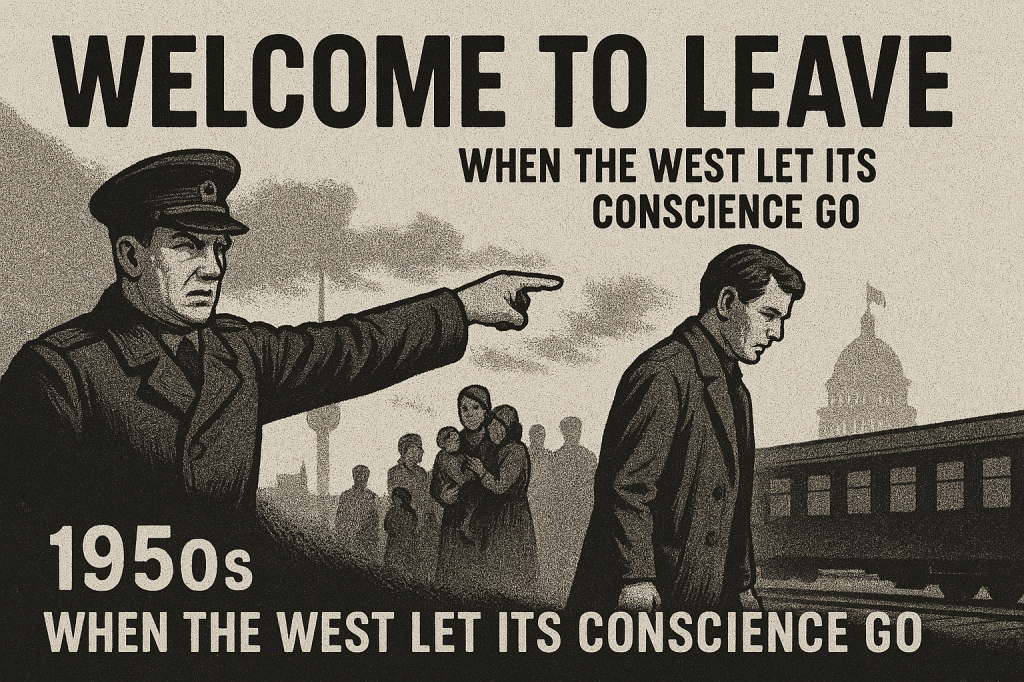
With gestures of magnanimity and carefully staged ceremonies, the U.S., Britain, and France began encouraging their most controversial intellectuals to accept “voluntary exile” to the Communist East. They called it an exchange of ideas. Others called it an export of dissent.
And so they left—writers, philosophers, revolutionaries in spirit. Some walked onto eastbound trains with pride. Others boarded planes with quiet dread. The Soviets welcomed them with open arms and tight scripts. The world watched with fascination.
No one yet knew what would happen when the dreamers of the West met the machinery of the East.
But behind every passport stamped and suitcase packed, a question lingered:
What happens when those who chase utopia are invited to live inside someone else’s version of it?
 What If: The Archive
Leave a comment