The Shooting of December 8, 1980
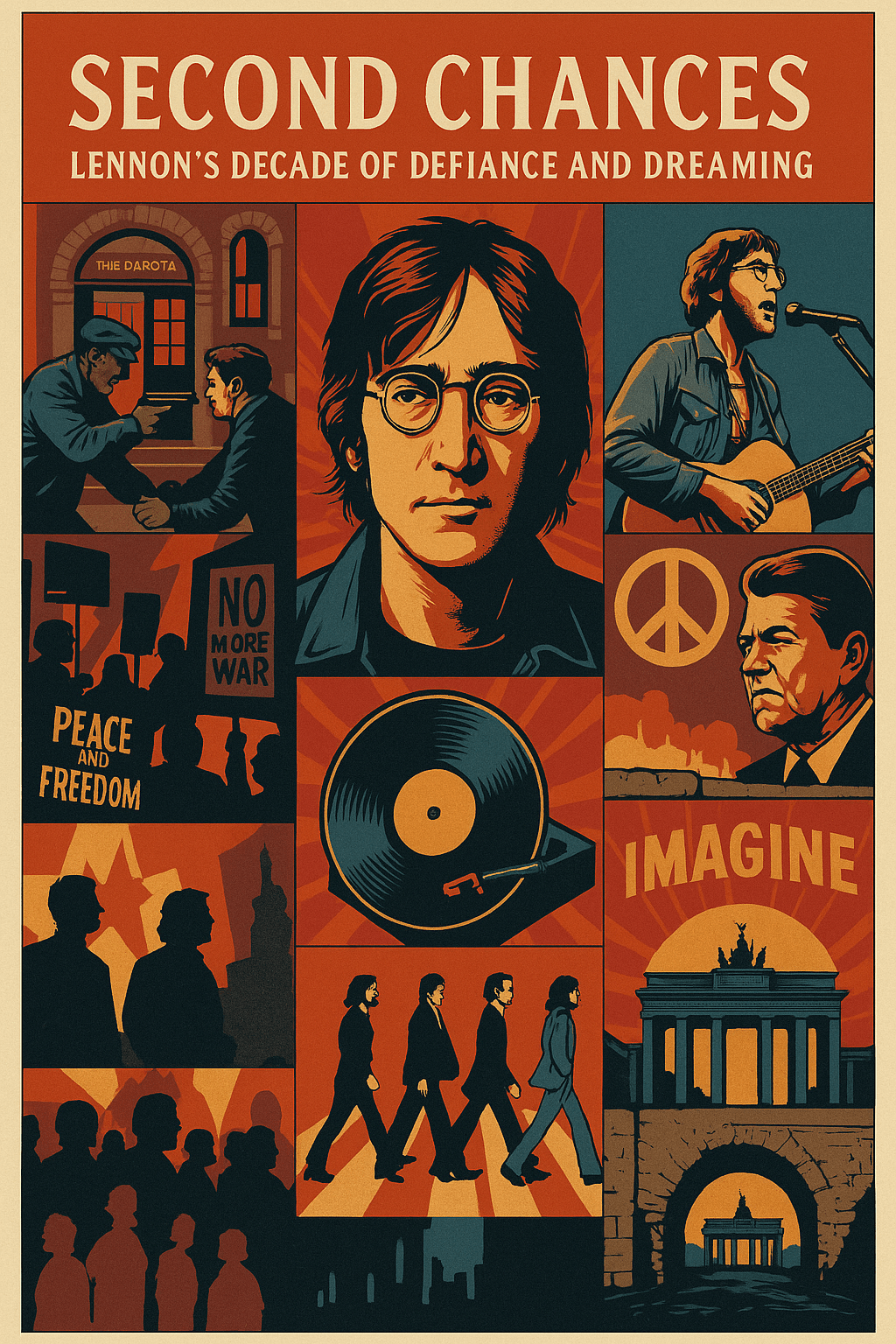
On the evening of December 8, 1980, outside the Dakota Building in New York City, John Lennon and Yoko Ono returned from a recording session for Lennon’s new album, Double Fantasy. Mark David Chapman, a disturbed fan who had been stalking Lennon for days, aimed a revolver at the former Beatle. However, in this timeline, Chapman hesitated long enough for one of the building’s doormen, José Perdomo, to intervene. Perdomo tackled Chapman as he raised the gun, allowing Lennon to escape unharmed. Chapman was subdued and arrested at the scene.
The near-death experience profoundly affected Lennon, reigniting his political activism and creativity. That night, Lennon reportedly told Yoko Ono, “If this is my second chance, I’m going to make it count.”
1981–1983: A Reborn Activist and Artist
Following the attempted assassination, Lennon took a step back from the public eye to reflect on his life and values. The Double Fantasy album soared to the top of the charts as fans worldwide rallied around Lennon. With the renewed momentum, Lennon began appearing in interviews where he spoke openly about gun control, mental health, and the dangers of celebrity worship.
In 1982, Lennon released his follow-up album, Phoenix Rising. A mix of introspective ballads and politically charged anthems, it included the hit single “Second Chances,” which became an anthem for resilience. The album cemented Lennon as both a pop icon and a voice of conscience for the 1980s.
Simultaneously, Lennon deepened his involvement in global causes. Partnering with figures like Bob Geldof and Amnesty International, he organized the “Peace and Freedom Concert” in 1983, a massive benefit event to combat world hunger and promote nuclear disarmament. The concert, featuring Paul McCartney, George Harrison, and Ringo Starr, was the first time all four Beatles had shared a stage since 1969. Though the reunion was brief, it sparked speculation about future collaborations.
1984–1986: Lennon’s Influence on Politics and Culture
Lennon became a vocal critic of Ronald Reagan’s presidency and the escalating arms race. His 1984 album Dreams of Peace included pointed critiques of American imperialism, including the controversial track “Ronnie, Ronnie,” which accused Reagan of warmongering. The song led to public debates and even drew the ire of conservative pundits, who labeled Lennon as “out of touch” and “anti-American.”
During this period, Lennon also ventured into filmmaking, collaborating with Yoko Ono on a documentary titled Imagine Peace (1985), which explored the intersections of art, activism, and politics. The film, which premiered at the Cannes Film Festival, won critical acclaim and became a rallying cry for nuclear disarmament campaigns.
Lennon’s continued activism also influenced international politics. His participation in the global anti-apartheid movement in the mid-1980s brought attention to South Africa’s struggle, with Lennon headlining the “Freedom for Mandela” concert in London in 1986. His partnership with artists like Peter Gabriel and Tracy Chapman symbolized a new wave of socially conscious music.
1987–1990: The Beatles’ Reunion and the Fall of the Berlin Wall
By the late 1980s, Lennon’s relationship with Paul McCartney had fully healed, with the two collaborating on several projects. In 1987, Lennon and McCartney co-wrote “Together Again,” which became a global hit and fueled rumors of a Beatles reunion tour. While George Harrison initially resisted, citing a preference for solo work, he eventually agreed after persistent urging from Lennon and Ringo Starr.
In 1989, The Beatles (billed as “The Fab Four”) embarked on a limited world tour, performing reimagined classics like “Hey Jude” and “Come Together,” alongside new tracks co-written by Lennon and McCartney. The tour culminated in a historic concert at the Brandenburg Gate in Berlin on November 9, 1989, mere hours before the fall of the Berlin Wall. Lennon, ever the political poet, addressed the crowd with a simple yet powerful message: “Walls are meant to fall, and people are meant to come together.”
This performance became an enduring symbol of unity in a rapidly changing world.
Impact on the World (1980–1990)
- Music and Culture: Lennon’s survival altered the trajectory of music in the 1980s. His collaborations with The Beatles and other artists helped bridge the gap between classic rock and the emerging sounds of the decade, influencing acts like U2, Bruce Springsteen, and Tracy Chapman.
- Politics: Lennon’s outspoken activism made him a polarizing figure, but his consistent advocacy for peace, equality, and human rights contributed to shifting public attitudes on nuclear disarmament, apartheid, and gun control.
- Mental Health Awareness: The narrative around Mark David Chapman’s mental health prompted widespread conversations about the treatment of mental illness and the responsibility of public figures to address the darker side of fame.
- Pop Culture Legacy: The Beatles’ reunion and the Brandenburg Gate concert remain iconic moments in this alternate timeline, comparable to Live Aid in cultural significance.
 What If: The Archive
Leave a comment