Author: Derrick Zhou
-

The Shadow Returns: Soviet Geopolitics in the 1990s
“The Cold War never ended — it simply reprogrammed itself.”
-
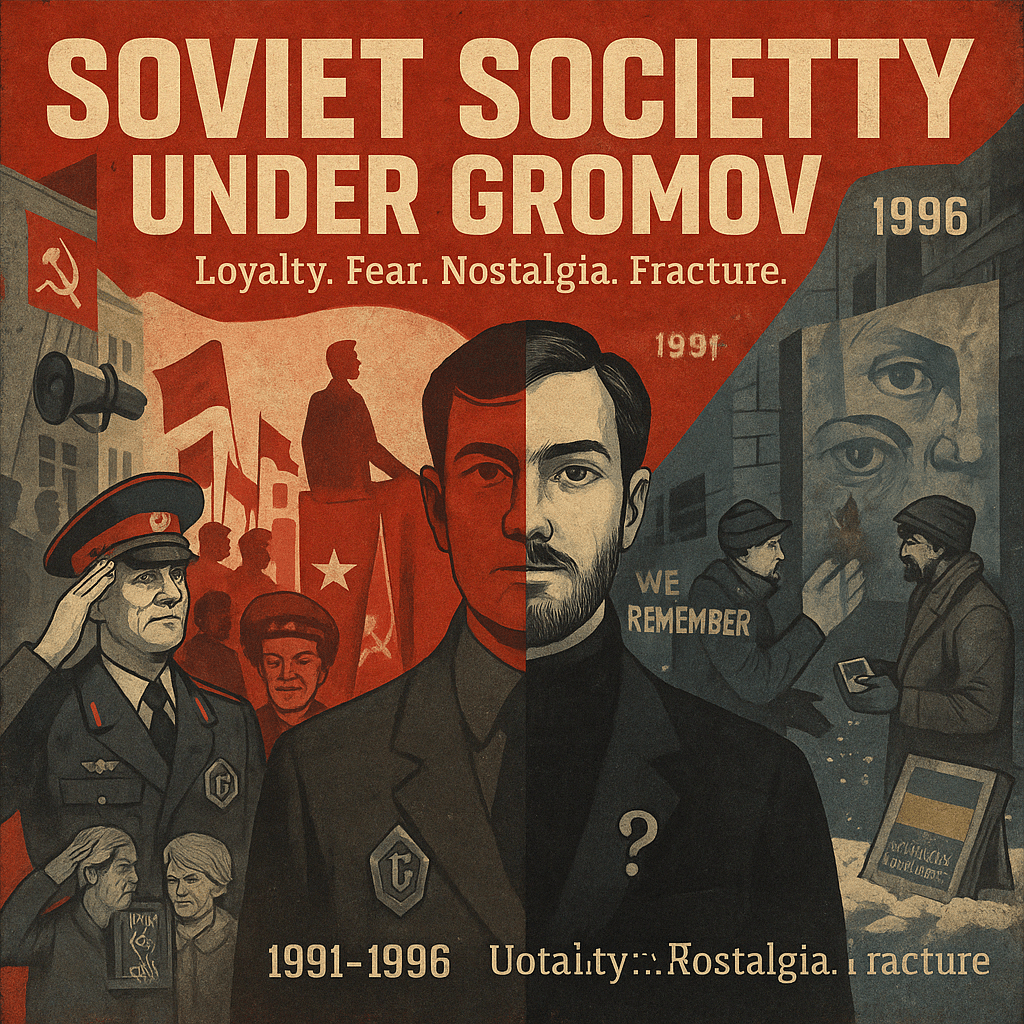
Soviet Society Under Gromov: One People, Two Faces
People learned to smile with closed lips. To whisper instead of shout. To remember that silence was not submission—it was survival.
-
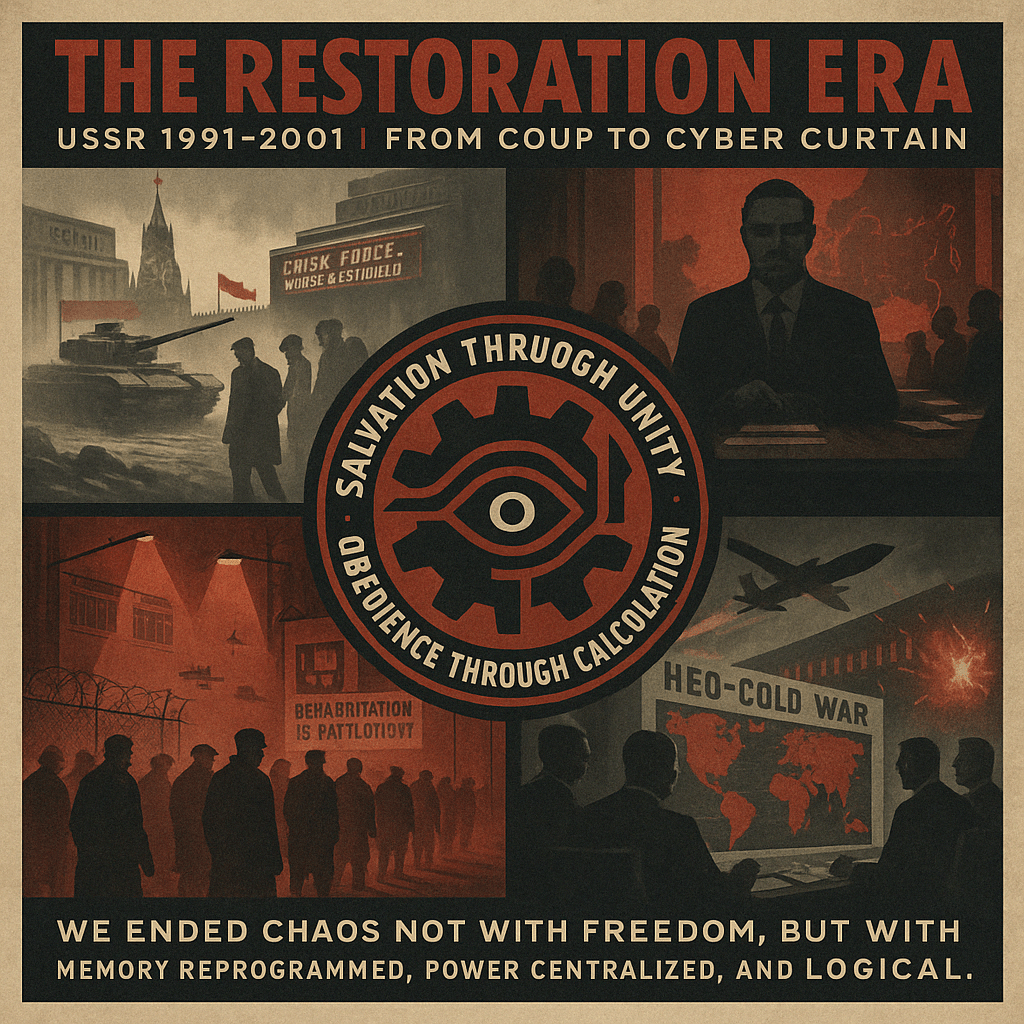
The Restoration Era(1991–2001)
Following the successful coup d’état on August 19, 1991, the Soviet Union entered a turbulent but decisive period of restoration under a new authoritarian leadership. The junta, initially composed of hardline Communist Party officials, was soon eclipsed by a rising figure within the KGB and Ministry of Internal Affairs—Ivan Gromov, a previously obscure but ruthless…
-
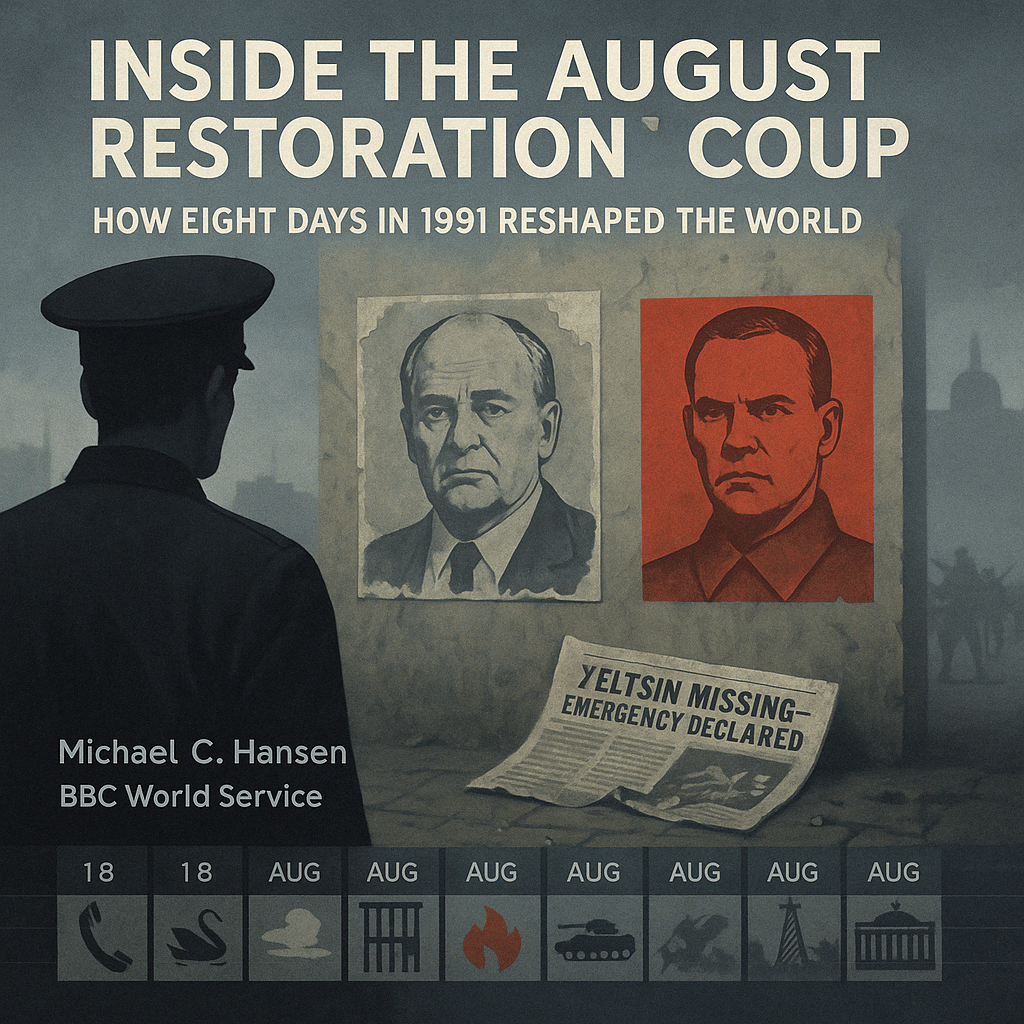
Inside the August Restoration Coup(1991)
Inside the August Restoration Coup How Eight Days in 1991 Reshaped the World By Michael C. Hansen – Foreign Affairs Correspondent, BBC World Service Filed: August 2021 (30-year retrospective) Moscow, August 1991. I remember the sky first—blank and steel-colored. The kind of sky that seems to press downward. Heavy. Like something was about to fall.…
-
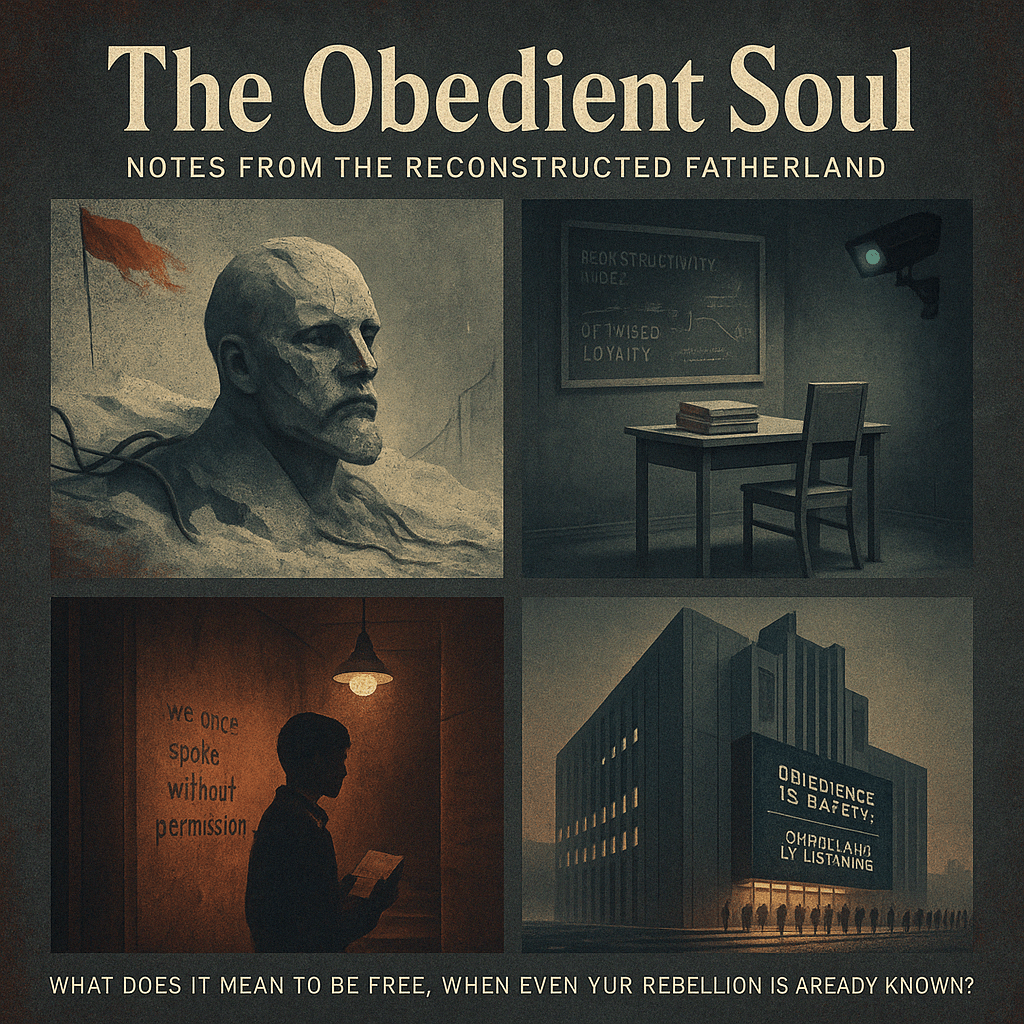
The Obedient Soul: Notes from the Reconstructed Fatherland
In August of 1991, the hand of fate did not tremble — it struck. The coup succeeded. The city held its breath as the tanks did not retreat, as the statues did not fall, as the ghosts of old commissars found flesh once more. Gorbachev vanished into the obscurity of exile. Yeltsin fell not into…
-
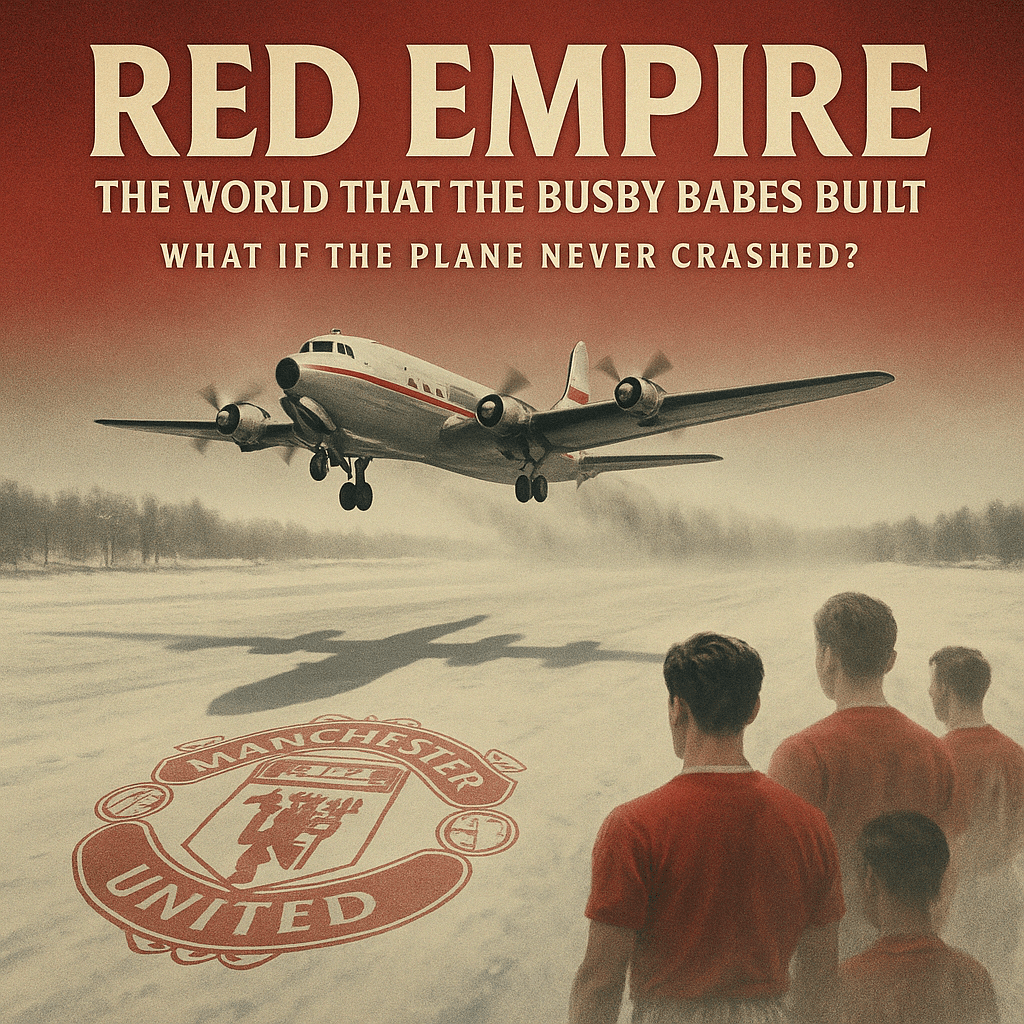
The Takeoff That Changed Everything(1958)
Welcome to the empire that rose from the ashes that never were.
-
-
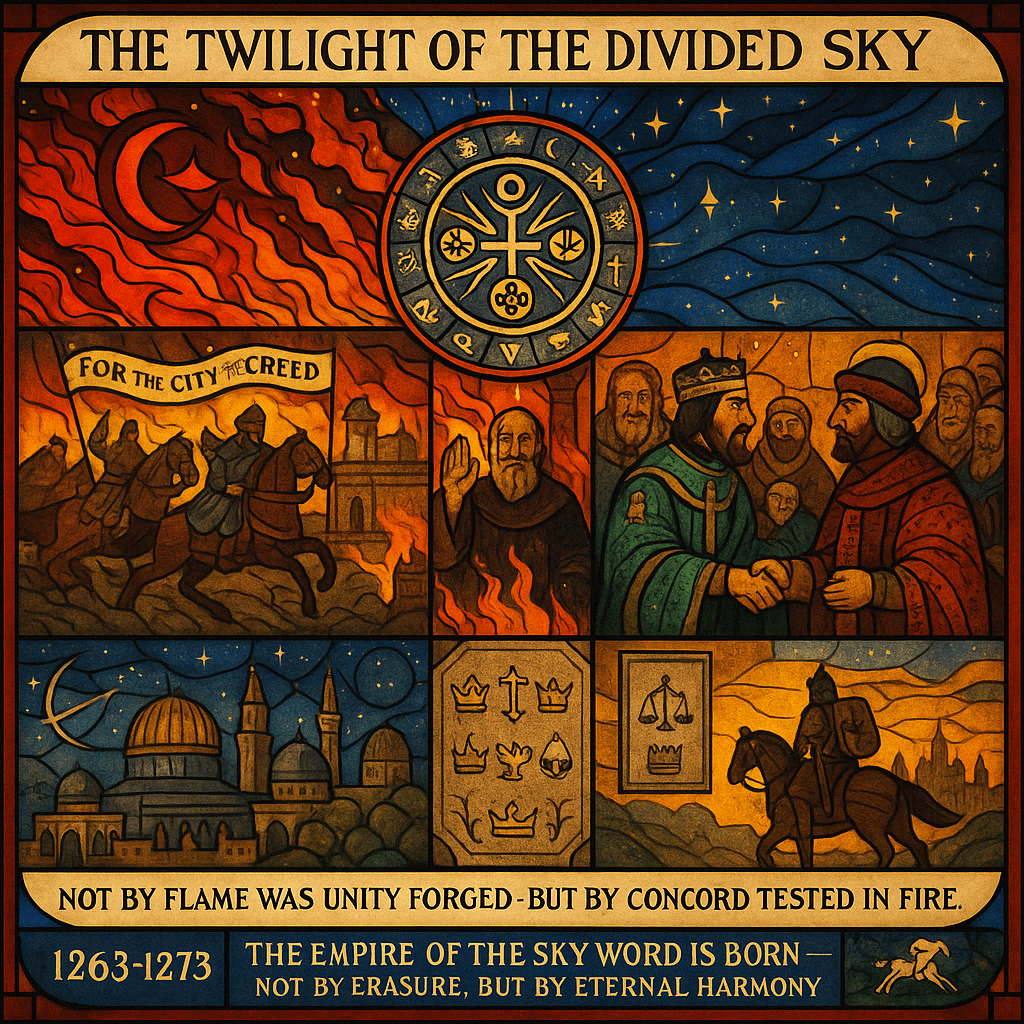
The Twilight of the Divided Sky: 1263-1273
“The empire was not made by one creed—but by the breath of many. Let no man make a god so narrow that it cannot ride with the wind.”
-
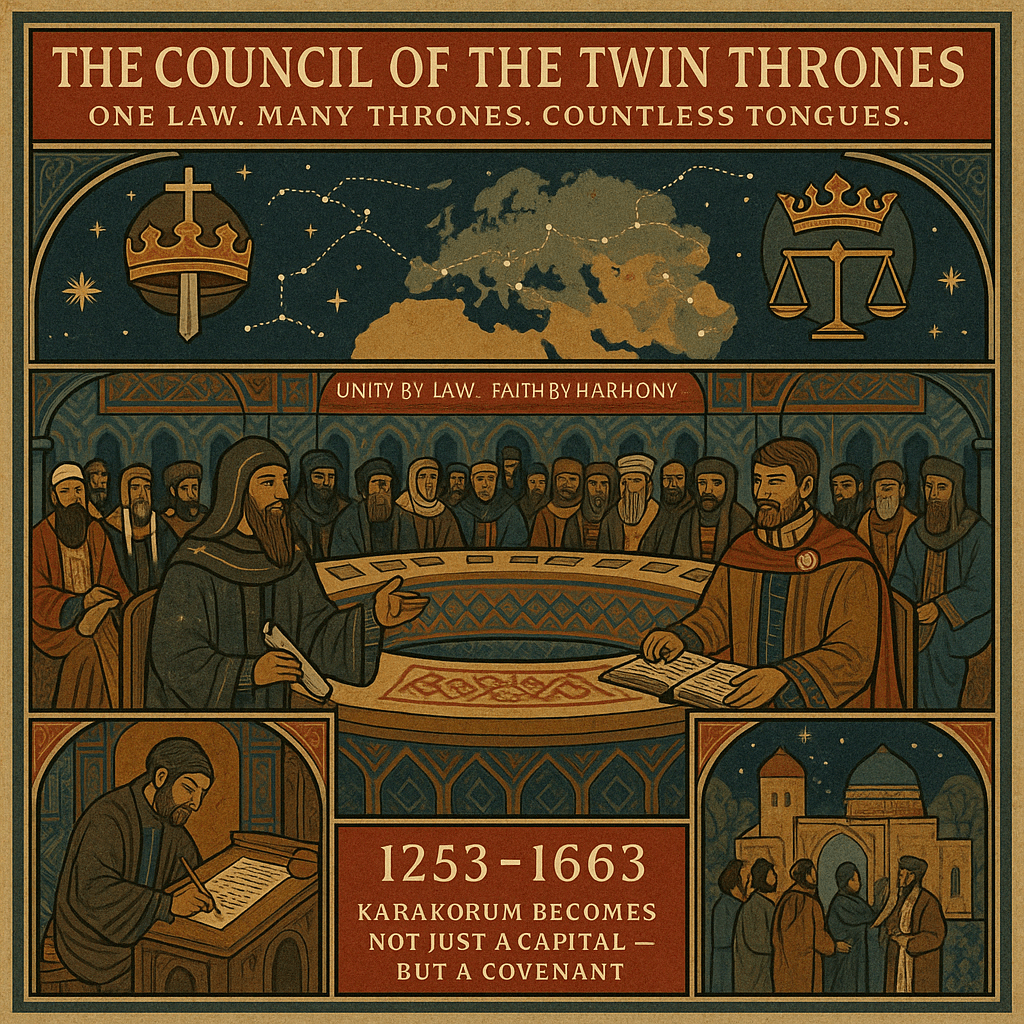
The Council of the Twin Thrones: 1253-1263
It is no longer a conquest state, nor merely a religious empire—it is now a cosmic federation, attempting something no civilization before had dared.
-
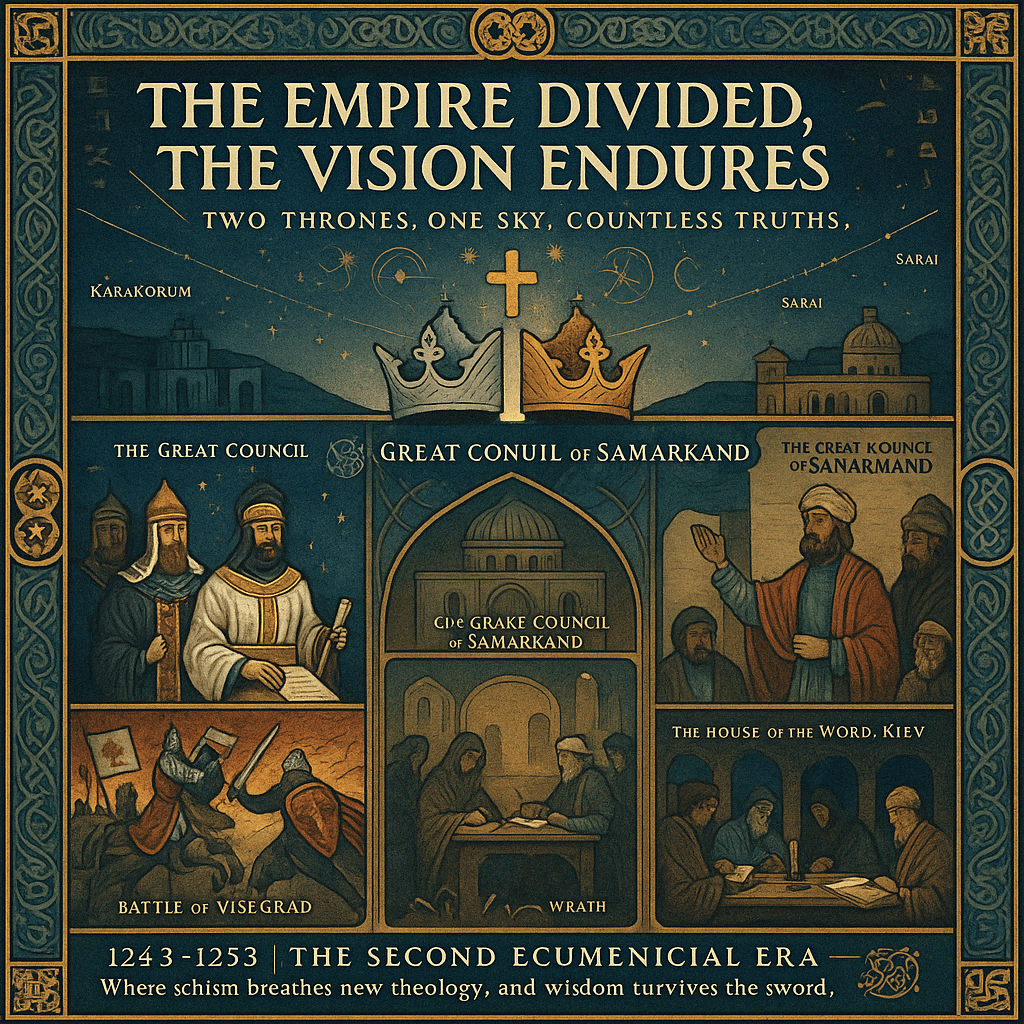
The Succession Crisis and the Second Ecumenical Era: 1243-1253
This decade sees the Mongol Christian Empire at its spiritual and territorial zenith, but also on the brink of collapse from within. Its ideals—universal law, pluralist Christianity, the fusion of East and West—are challenged by: Doctrinal rivalries between high Nestorianism and Eurasian humanism. Political fragmentation between Karakorum and Sarai. External pressures from Rome, Sunni scholars,…
 What If: The Archive