Category: The Ashes of Purity: A Chinese Century of Pain and Reckoning
-

Those Carried by the Tide: A Father, A Son, A Nation
他没有公开承认自己的过去,没有告诉任何人,他曾是一个狂热的红卫兵,他曾是那个“砸碎旧世界的人”。他只是希望,自己能在这些孩子身上,看见一些新的可能,看见那些曾被伤害的人,仍然能有一个不被仇恨吞噬的明天。
-
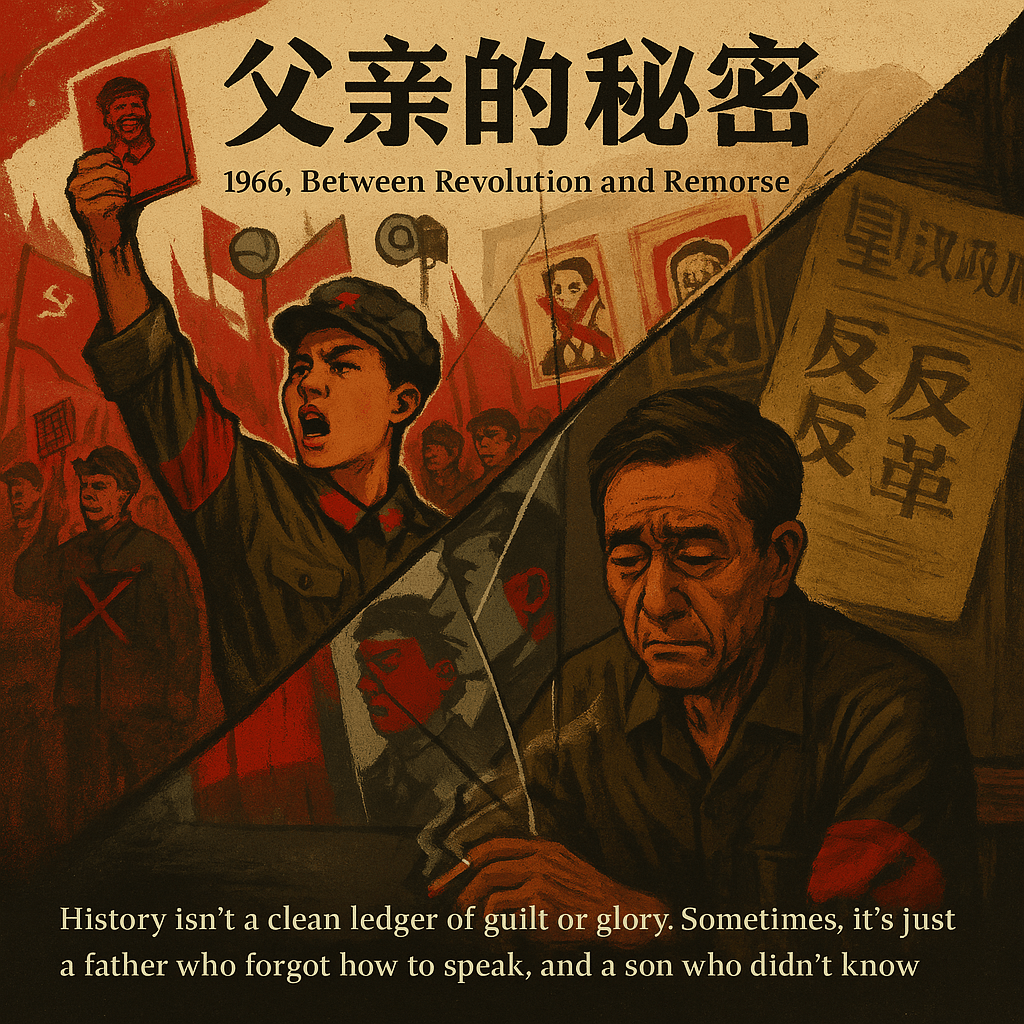
Father’s Secret: 1966, Between Revolution and Remorse
这个世界,不是“好人”与“坏人”这么清晰的对立,罪恶也不仅仅是单个人的选择,而是时代、环境、意识形态共同造成的。
-
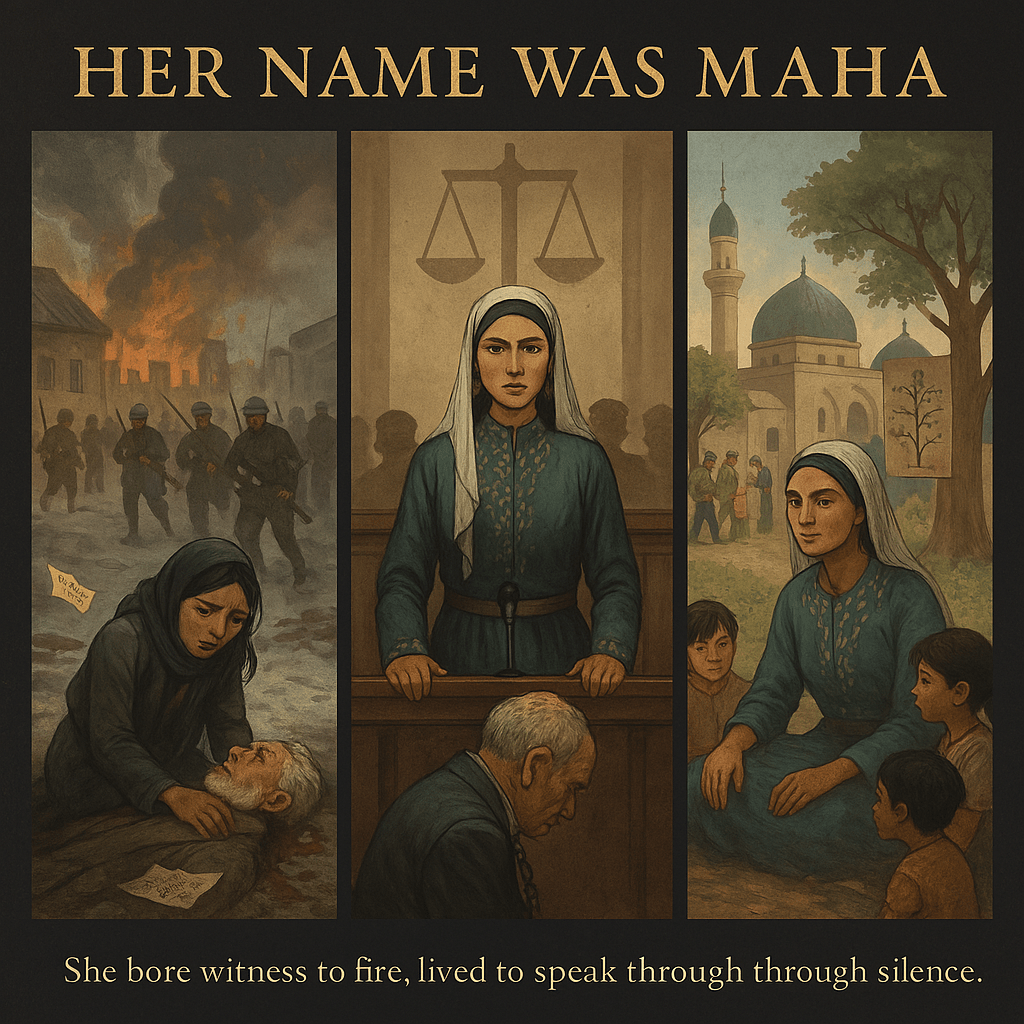
Her Name Was Maha: Memory, Survival, Justice(1915-1951)
玛哈的一生,既是痛苦的见证,也是一种超越仇恨的智慧。她选择把自己的痛苦化作警示,告诉后人:历史不能忘记,但仇恨不能延续。
-
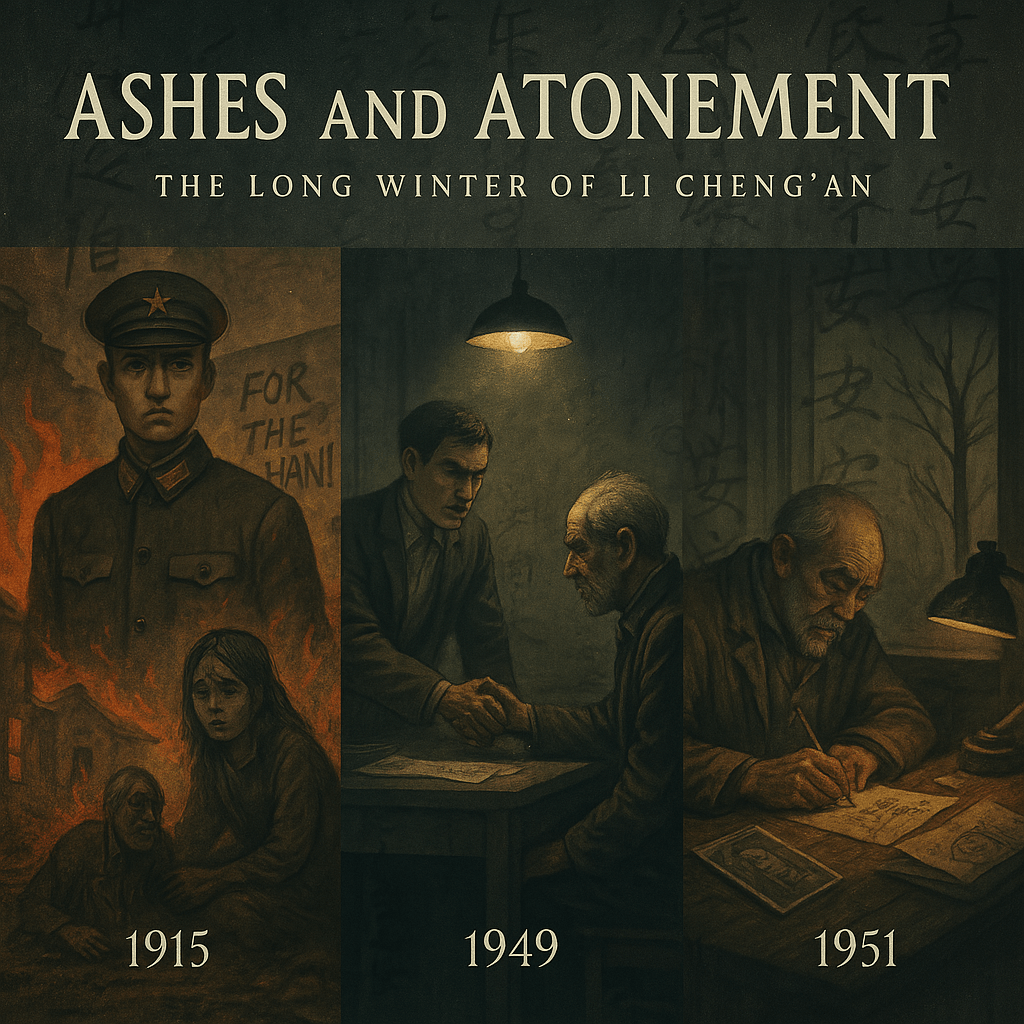
Ashes and Atonement: The Long Winter of Li Cheng’an
李承安的故事,是皇汉主义者在这个时间线中的一个缩影。他们曾相信自己的行为是“正义的”,是“复兴民族”的必要牺牲,但在暴行的背后,是无数的鲜血和无法挽回的生命。当晚年面对历史的审判时,他们终于看清了自己的罪行,却发现已经无力回头。
-
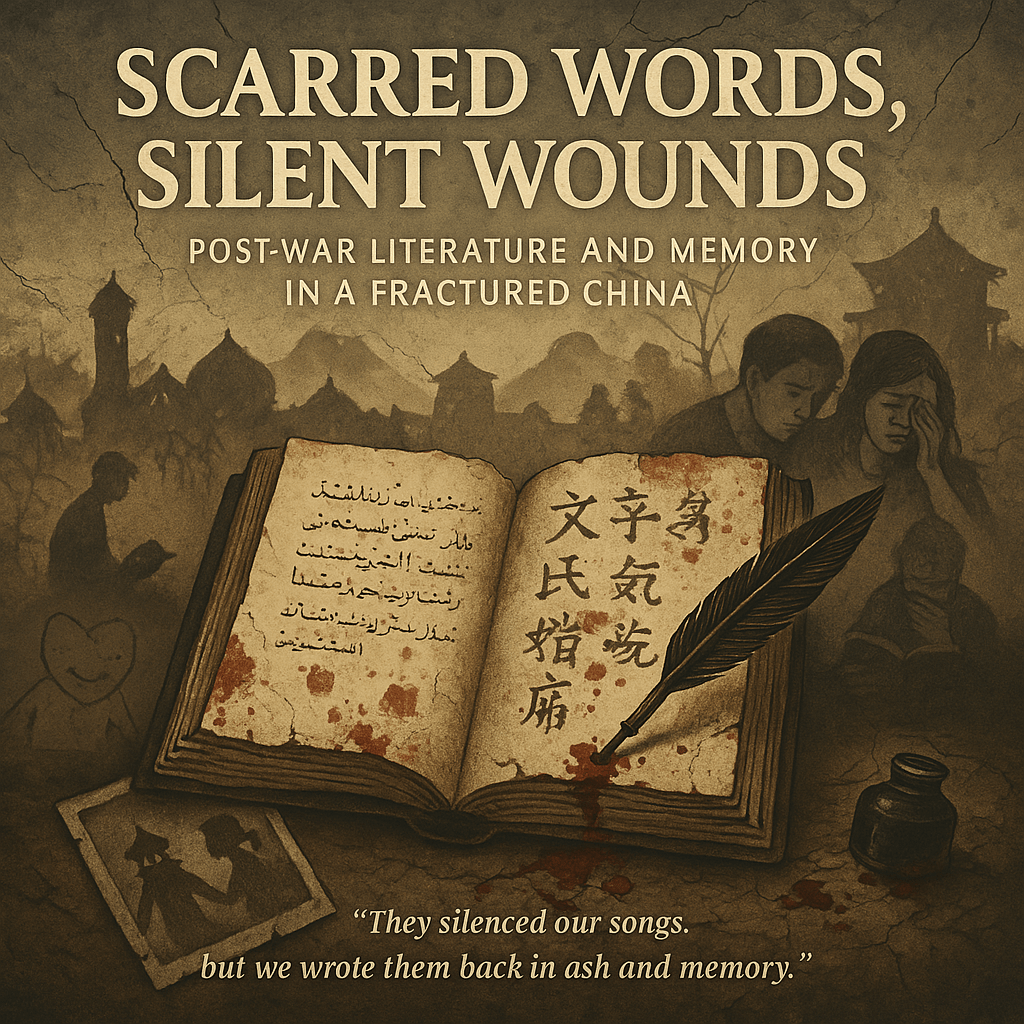
Scarred Words, Silent Wounds: Post-War Literature and Memory in a Fractured China
Scarred memory literature in post-war China becomes a powerful medium for processing the trauma of the Huang-Han era. Through vivid storytelling and poignant themes, these works memorialize the suffering of minorities, examine the failures of ethnonationalism, and offer a vision of a more inclusive, united future.
-
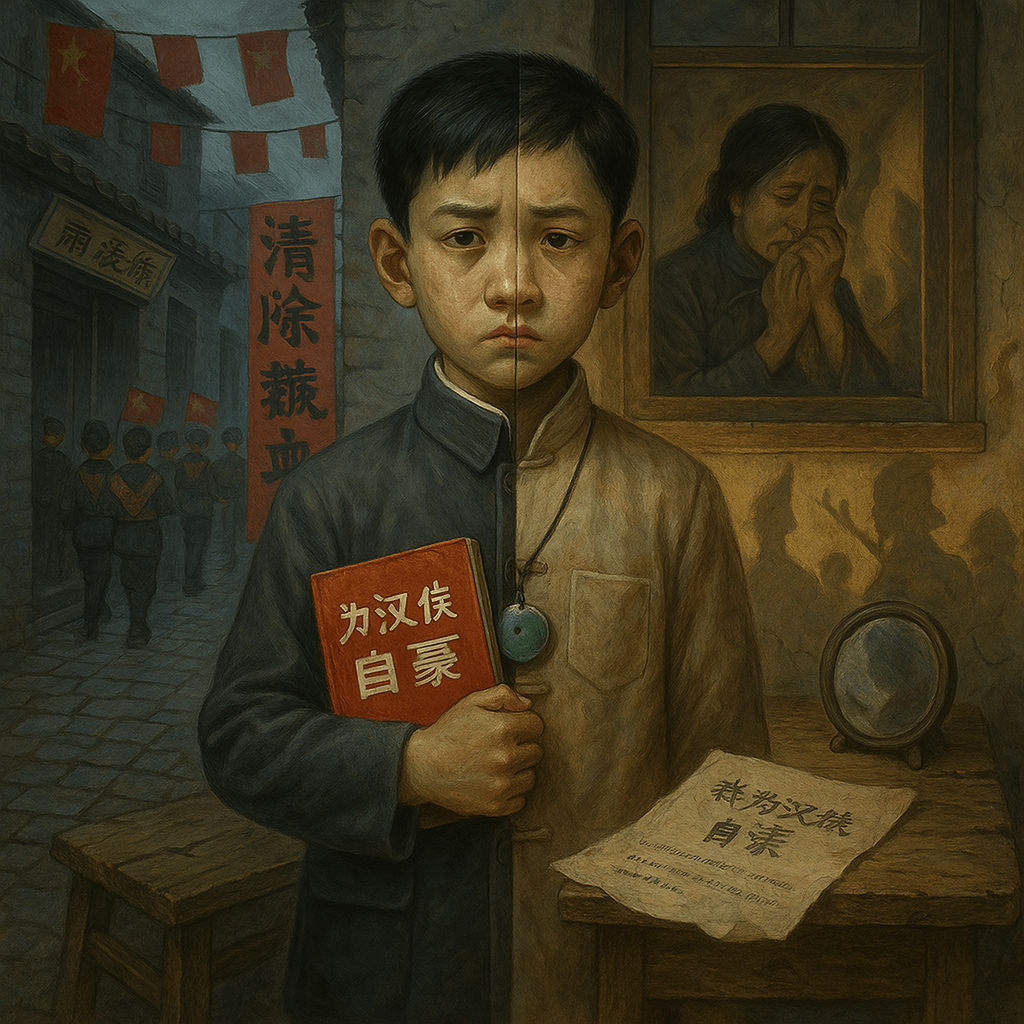
Half of Me in Hiding: A Boy Between Bloodlines
明启的故事是这个时期无数混血孩子的缩影。在汉族至上的社会环境中,他们的身份被强行二元化,无法拥抱自己的全部。而这份身份的撕裂,也象征着一个民族对自己多元历史的不接受与强行抹除。
-
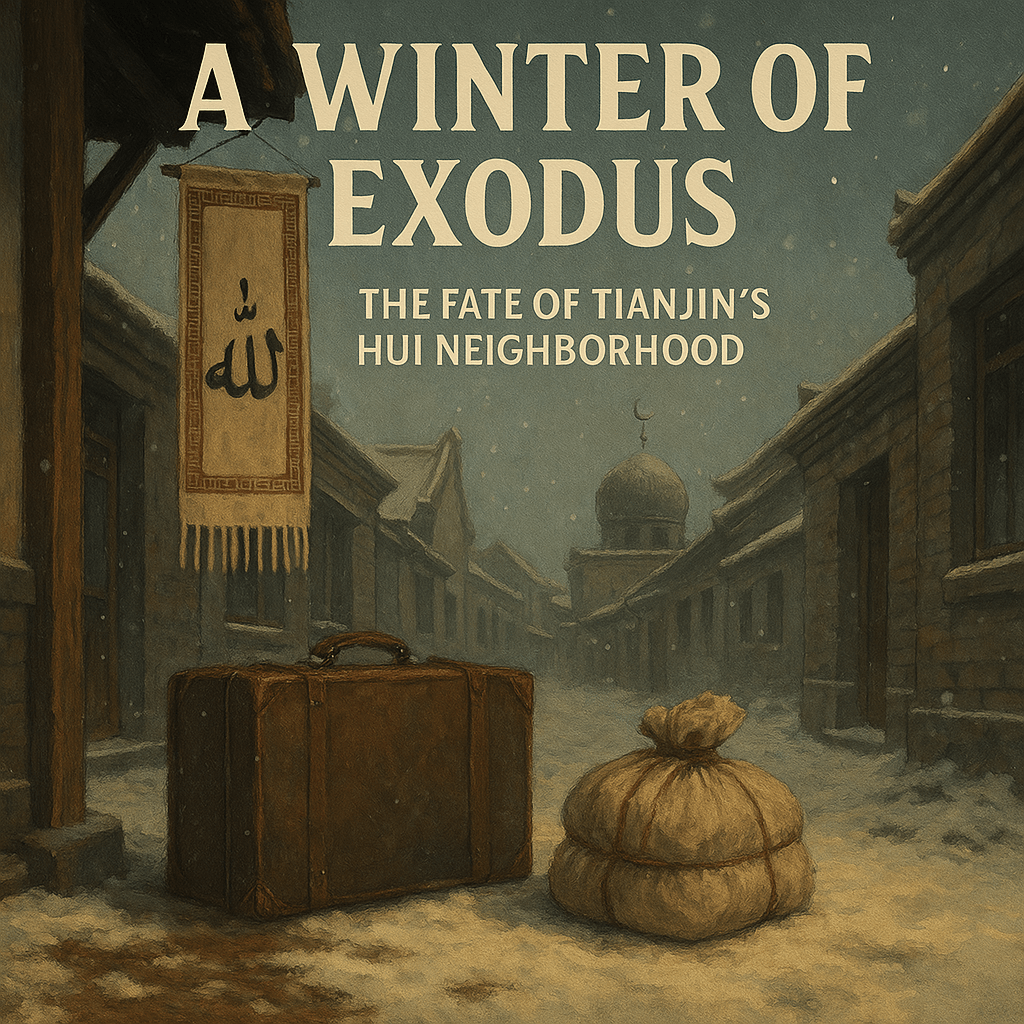
Winter 1913: The Displacement of Tianjin’s Hui Quarter
He once lit a fire here to cook for his neighbors. Now, not even the ashes remain.
-
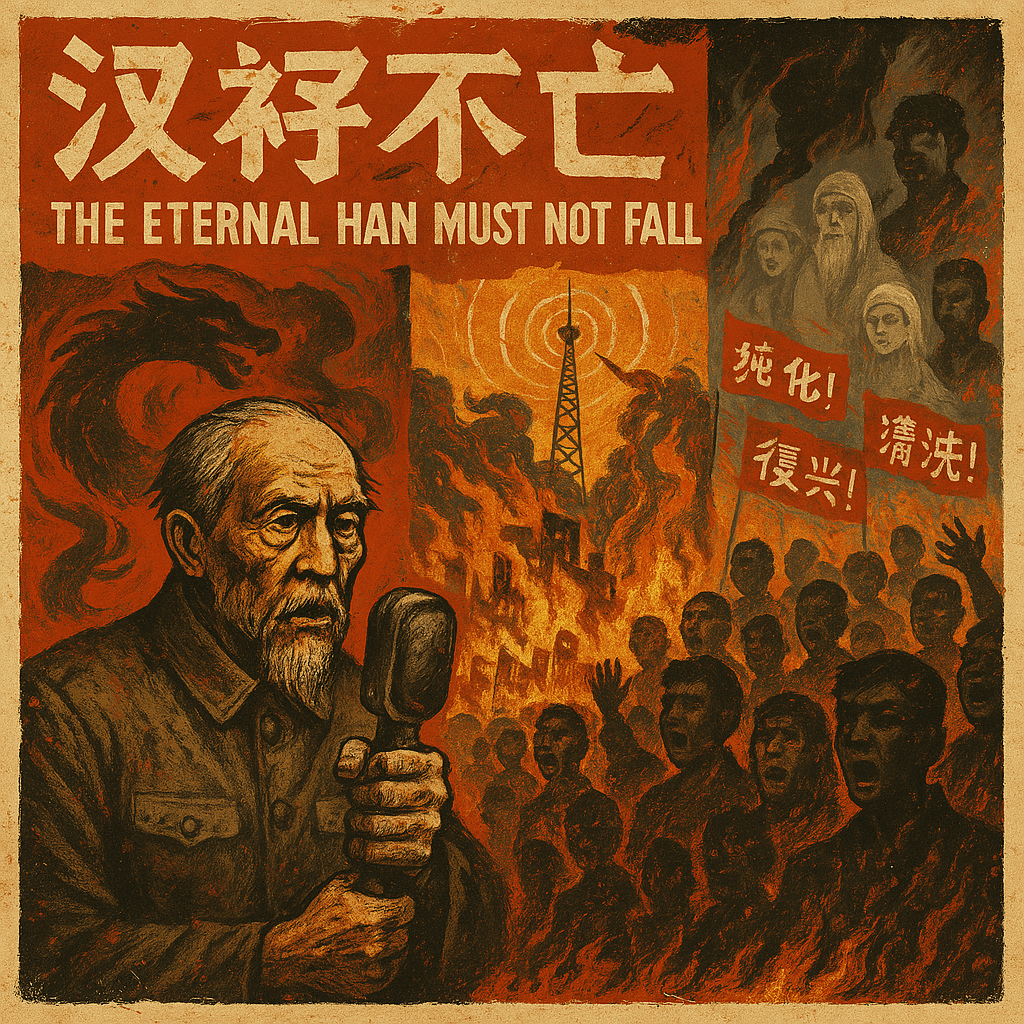
Zhang Binglin’s 1937 Podcast Speech After the Fall of Nanjing: A Huang-Hanist’s Last Stand
Just days after the fall of Nanjing to the Imperial Japanese Army, Zhang Binglin, the ideological architect of Huang-Hanism and a senior propaganda figure of the collapsing regime, delivers a desperate speech via radio broadcast. The speech, similar in tone to Joseph Goebbels’ “Total War” speech in 1943, is filled with racial scapegoating, conspiracy theories,…
-

Zhang Binglin: Architect of Ethnic Nationalism, Prophet of Collapse
Zhang Binglin’s legacy is one of paradox: a scholar who weaponized identity, a revolutionary who became the architect of reaction, a man who dreamed of unity but delivered division. Under Communist rule, he is remembered as a cautionary tale—the mind behind a nationalism that promised revival but delivered ruin.
-
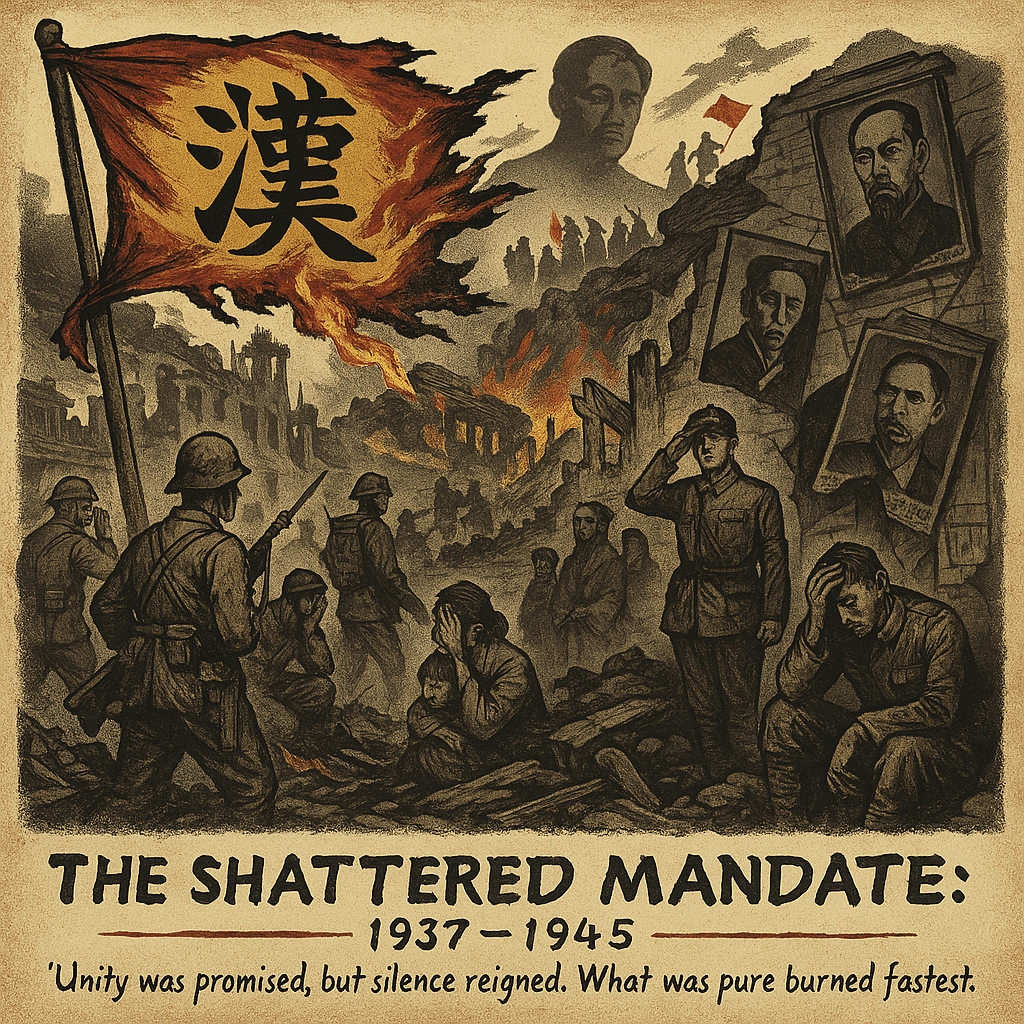
The Fate of the Huang-Han Regime During the Second Sino-Japanese War (1937–1945)
“When the enemy came, the people looked away—not out of fear, but out of faith long broken.”
 What If: The Archive