Category: The Ashes of Purity: A Chinese Century of Pain and Reckoning
-
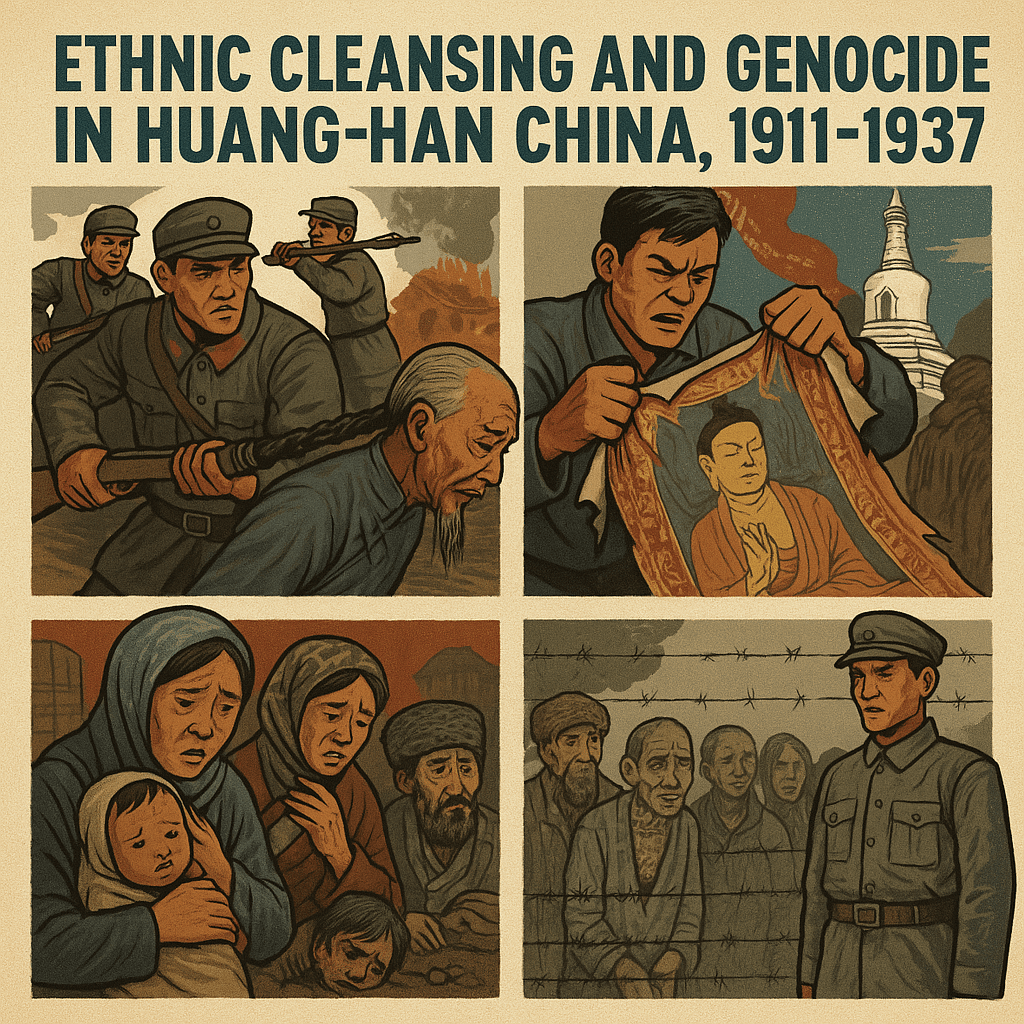
Ethnic Cleansing and Genocide in Huang-Han China (1911–1937)
In this alternate timeline, the Huang-Han regime’s rise to power is marked by systematic ethnic cleansing, forced assimilation, and cultural genocide targeting non-Han ethnic groups within China’s borders. The Huang-Han state’s policies, motivated by Han supremacist ideology, escalate throughout the 1911–1937 period, with devastating effects on the minority populations. Below is a timeline of key…
-
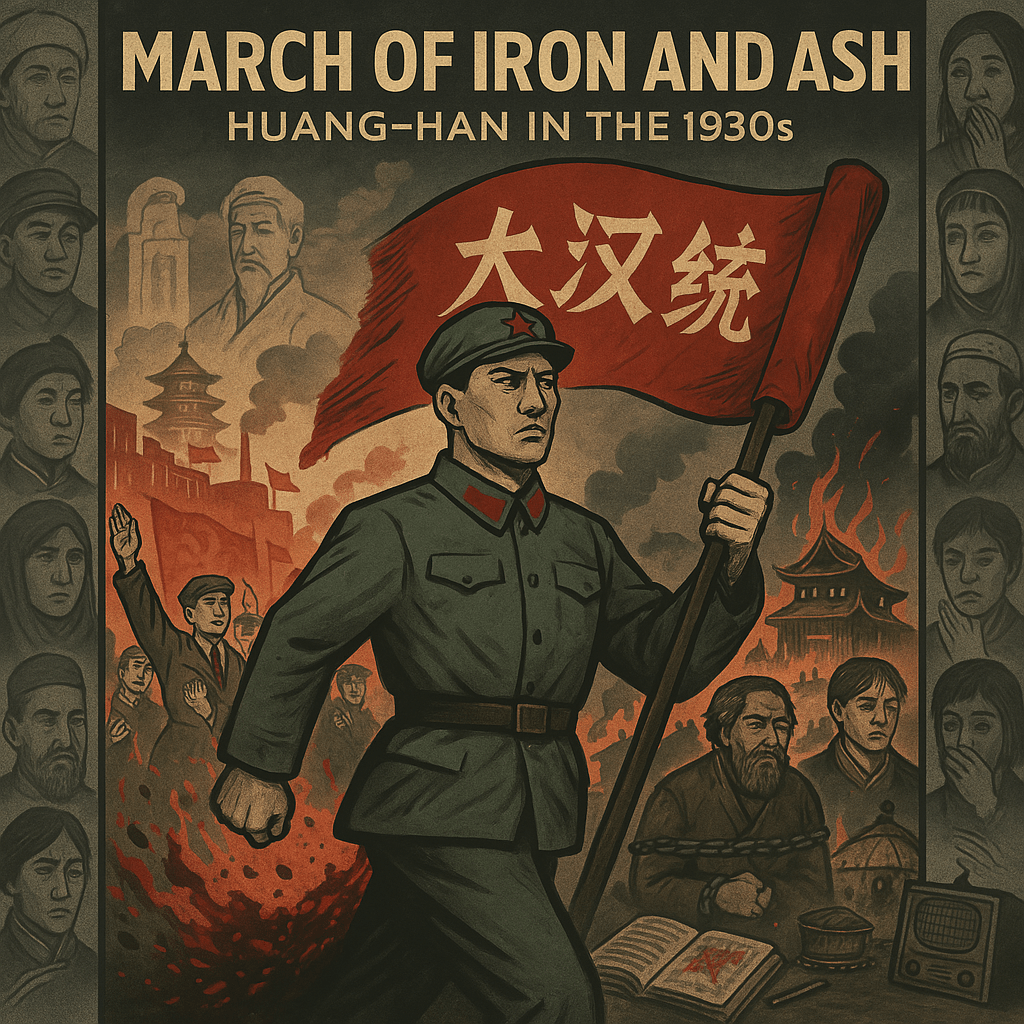
1930s in Huang-Han China: The March Toward Consolidation and Collapse
By the 1930s, Huang-Han China has evolved into a fully authoritarian, ethnonationalist state dominated by Han supremacist ideology. However, this period also marks the height of its internal contradictions and external pressures, which increasingly threaten the regime’s fragile unity.
-
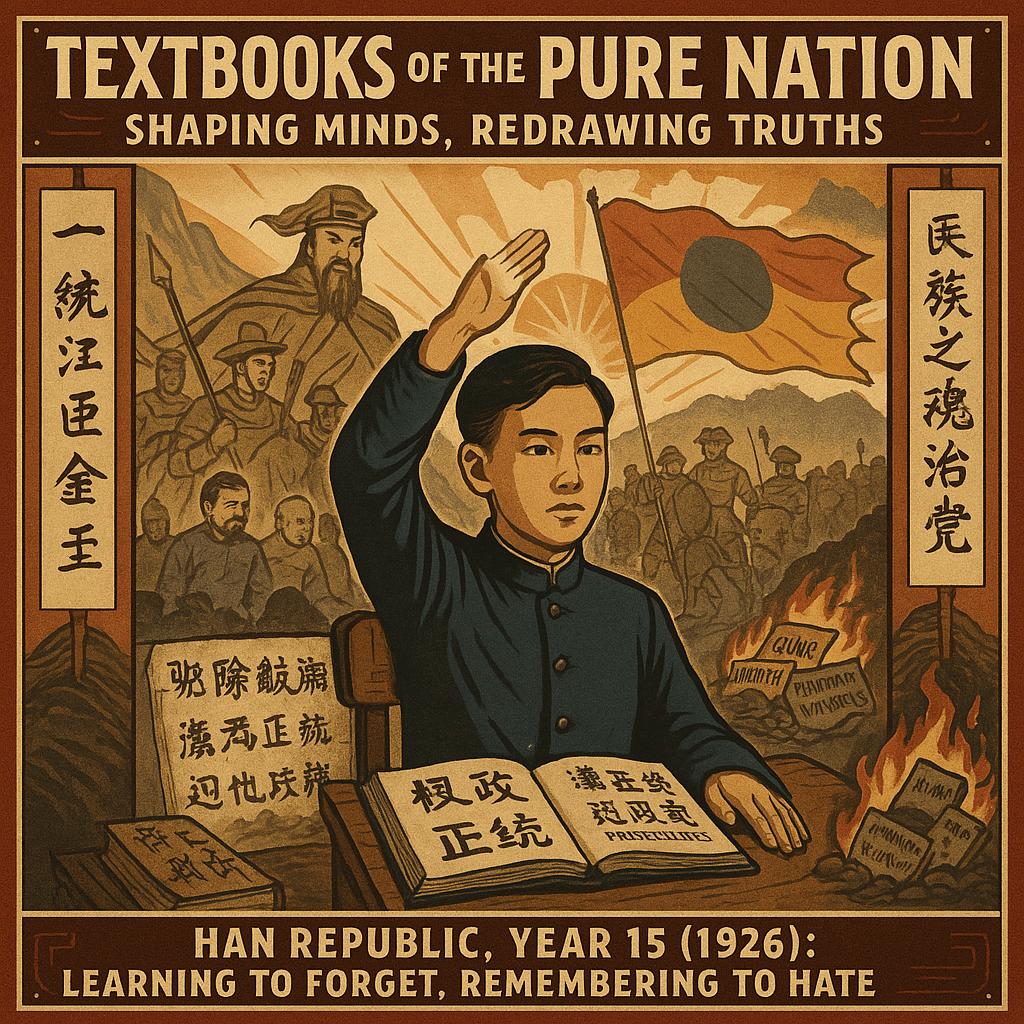
Textbooks of the Pure Nation: Shaping Minds, Redrawing Truths
These textbooks play a significant role in shaping the attitudes of young people in the 1920s. They create a generation of Han Chinese who see themselves as the rightful heirs of a great civilization, while viewing minorities and foreign powers with suspicion or hostility.
-
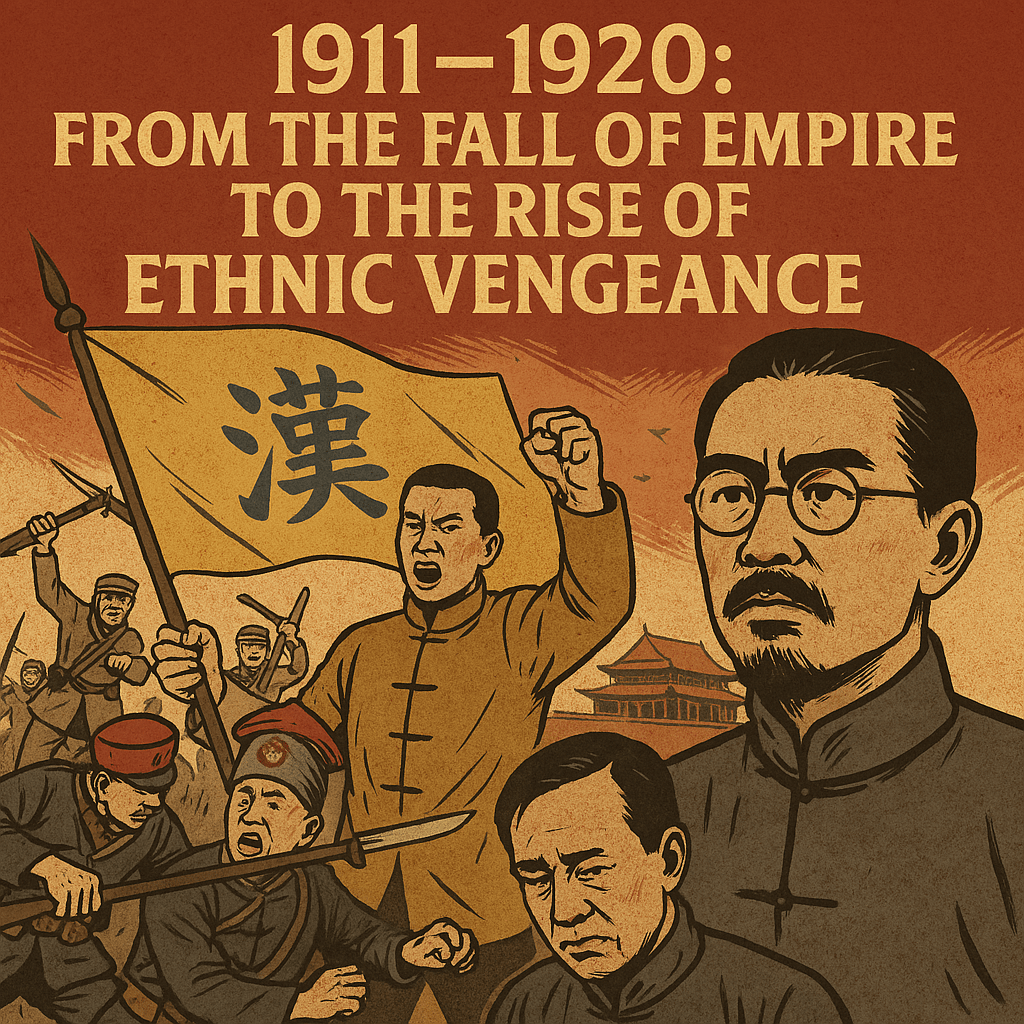
1911–1920: From the Fall of Empire to the Rise of Ethnic Vengeance
A decade when revolution devoured its own ideals, and unity was sacrificed at the altar of blood and identity.
-
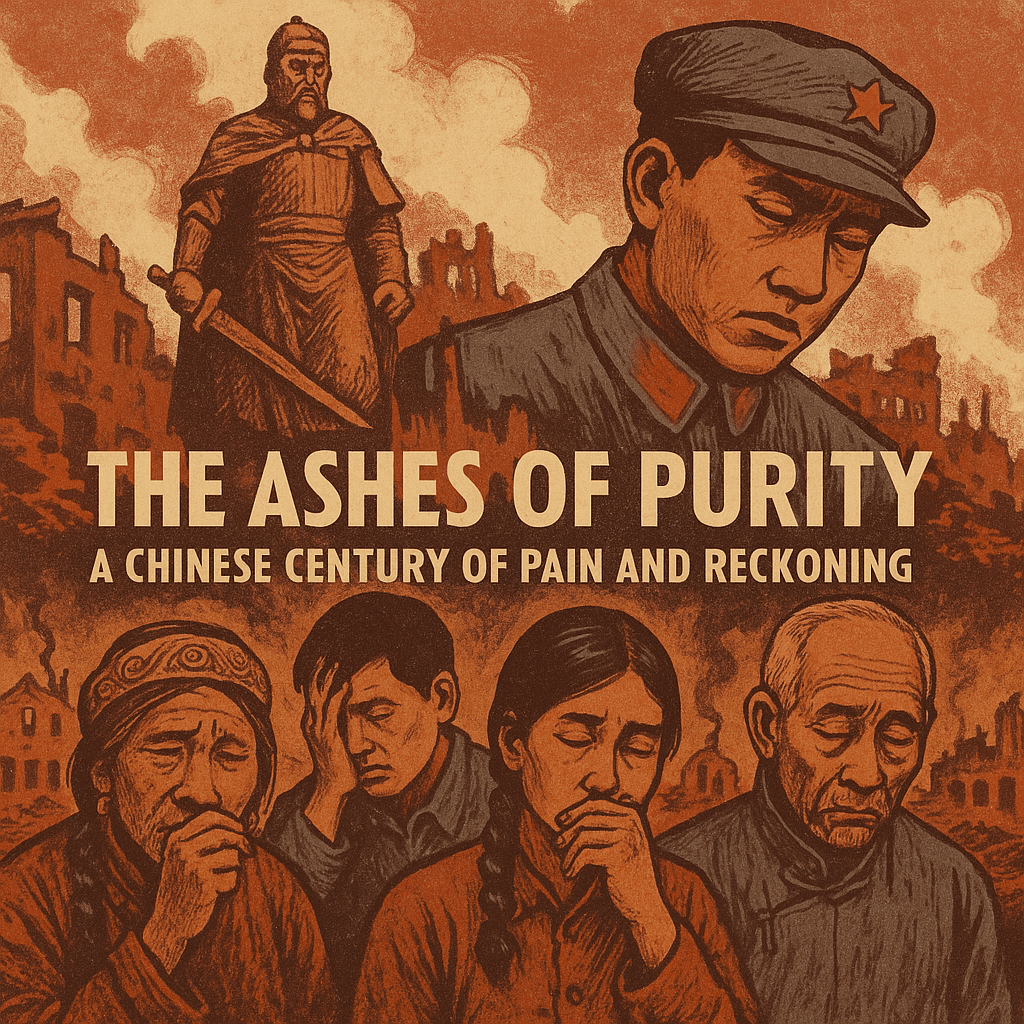
The Ashes of Purity: Introduction
This is not a triumphant tale. It is a slow-burning reckoning with memory, identity, and the terrible weight of revenge disguised as rebirth. The empire may have ended—but in the name of rebuilding, something sacred was lost.
 What If: The Archive