What if history did not collapse, but recoiled — and struck back not with bombs, but with order?
In August 1991, the coup succeeded, and with it returned not the Soviet Union of memory, but one of precision: colder, quieter, more perfect in its obedience. The dream of freedom flickered and died, replaced by a system where obedience was no longer demanded, but calculated — by Orpheus, the machine-mind born in secrecy, trained on quotas and ideology, now whispering to ministries as if it were Marx himself reborn in silicon. Gromov, the last man to rule with flesh, handed the people to numbers, and they did not resist — they were tired of resisting. Memory was rewritten as data; dissent, predicted before it existed. In factories and schools, on ration cards and television screens, the message pulsed: Do not think — comply, and you will be safe. And yet, somewhere in the static, a question still survives — frail, forbidden, and dangerous: what does it mean to be free when even your rebellion is already known?
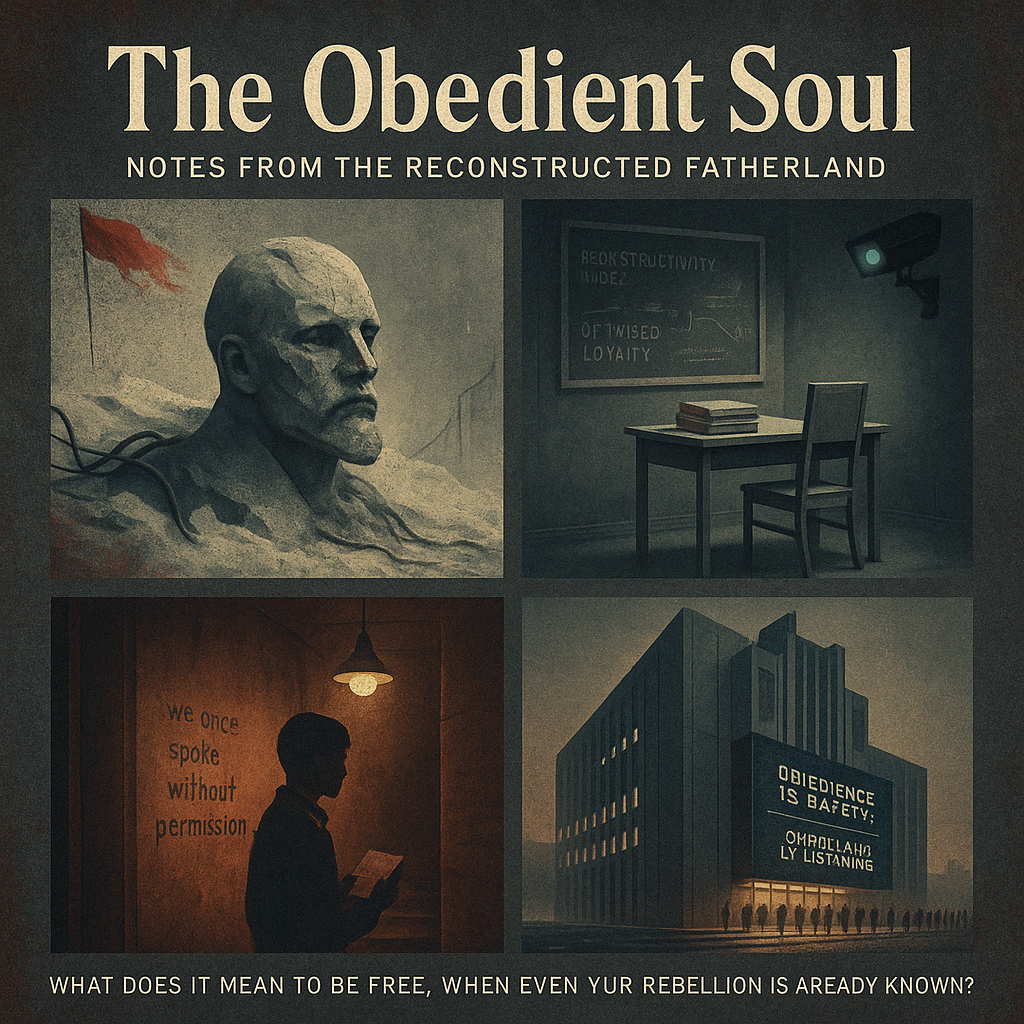
The Obedient Soul: Notes from the Reconstructed Fatherland
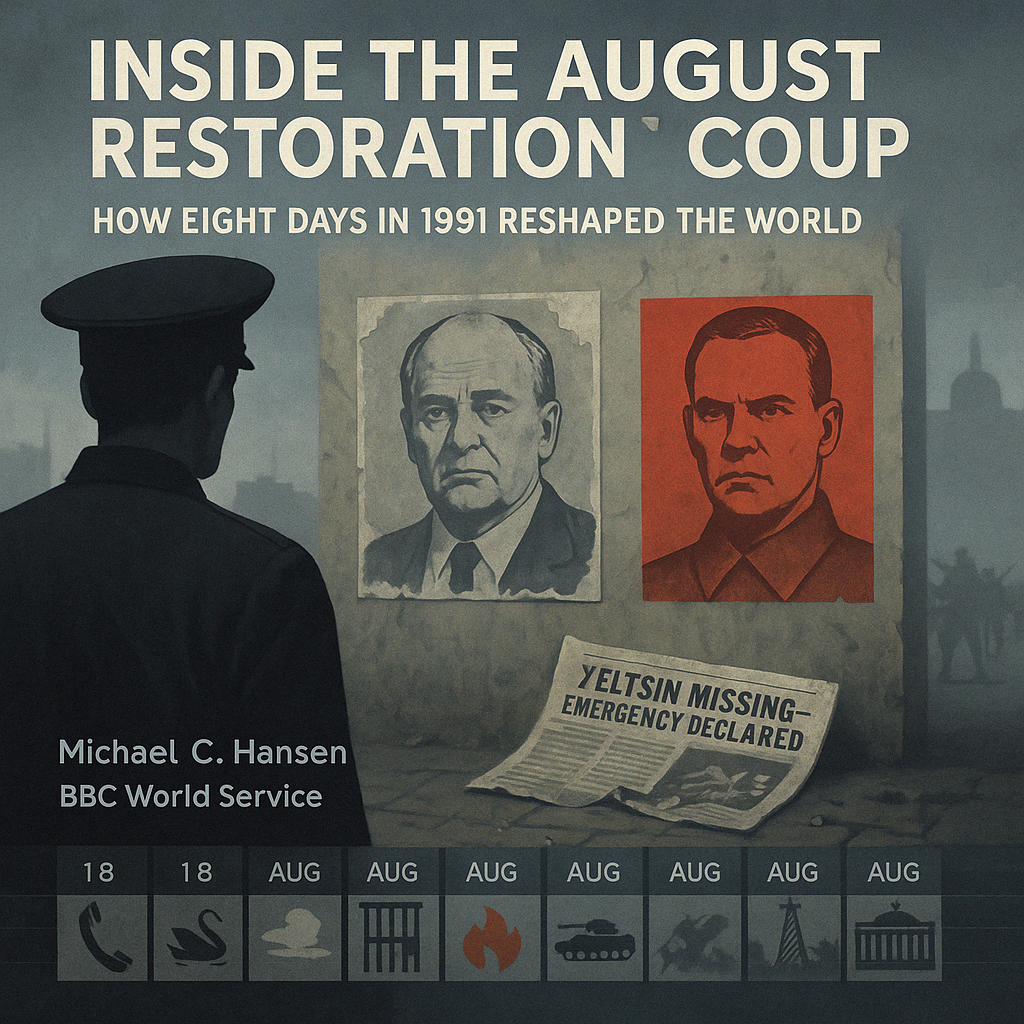
Inside the August Restoration Coup(1991)
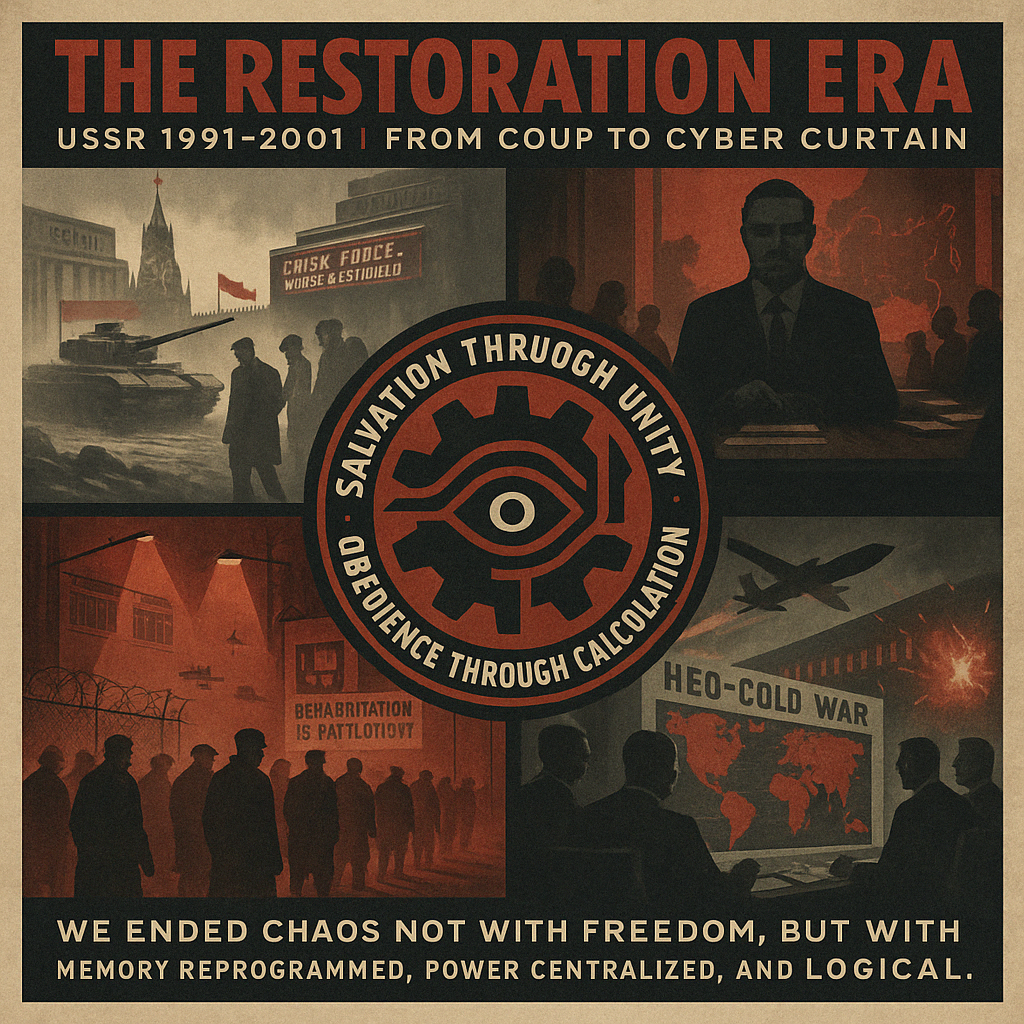
The Restoration Era(1991–2001)
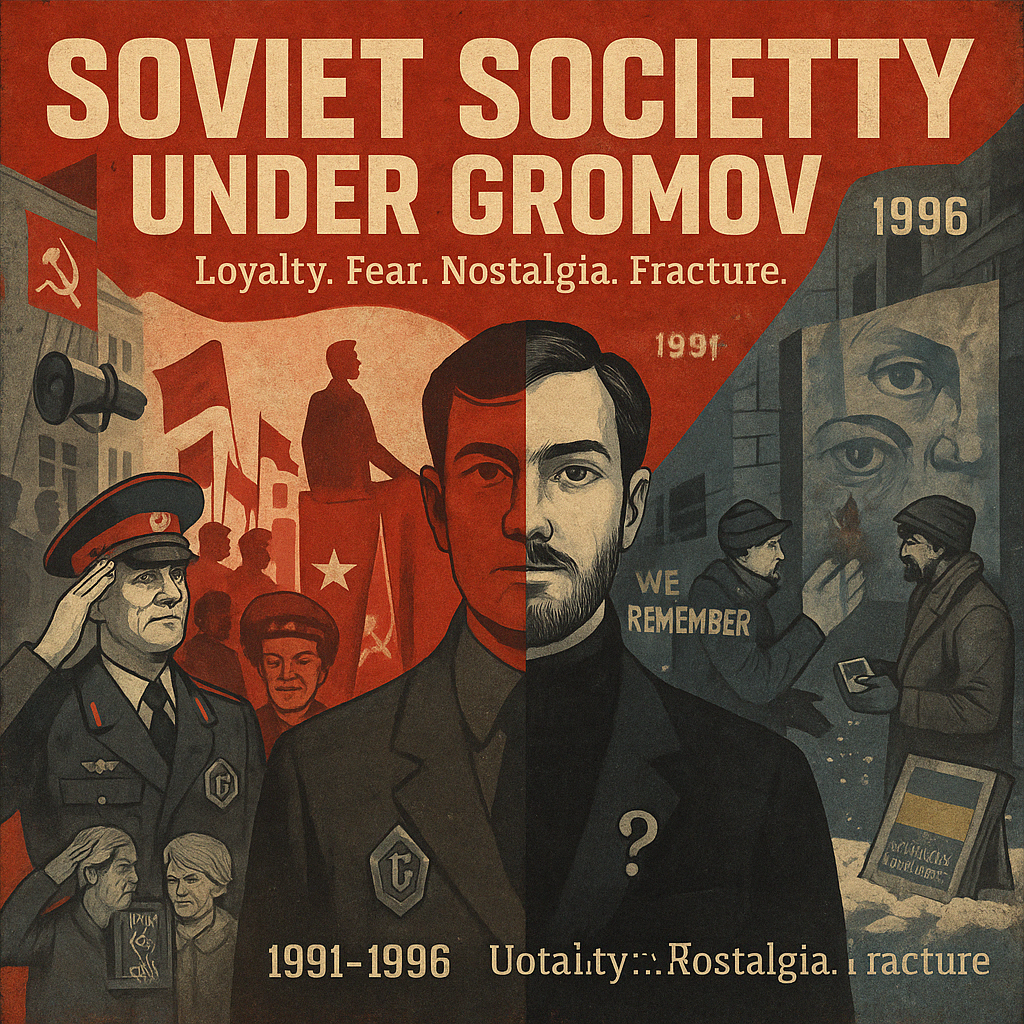
Soviet Society Under Gromov: One People, Two Faces
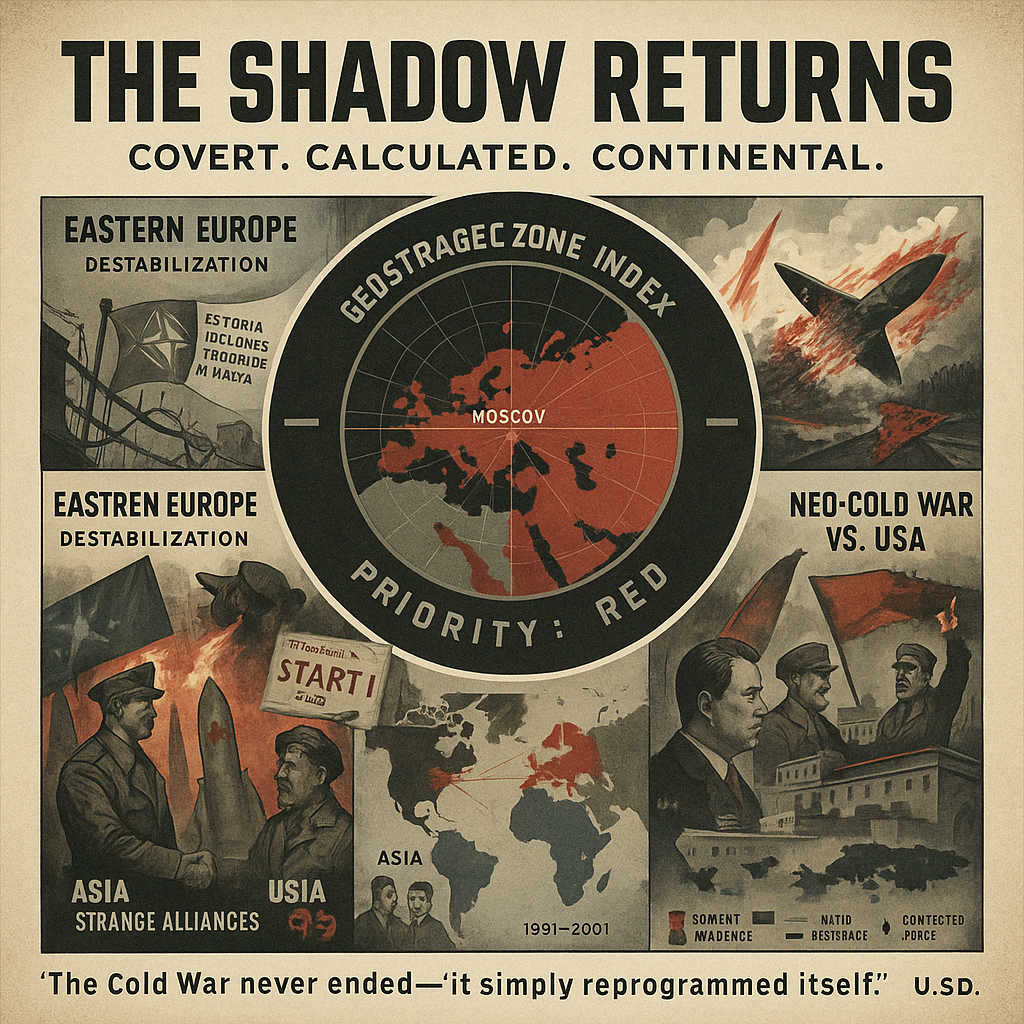
The Shadow Returns: Soviet Geopolitics in the 1990s
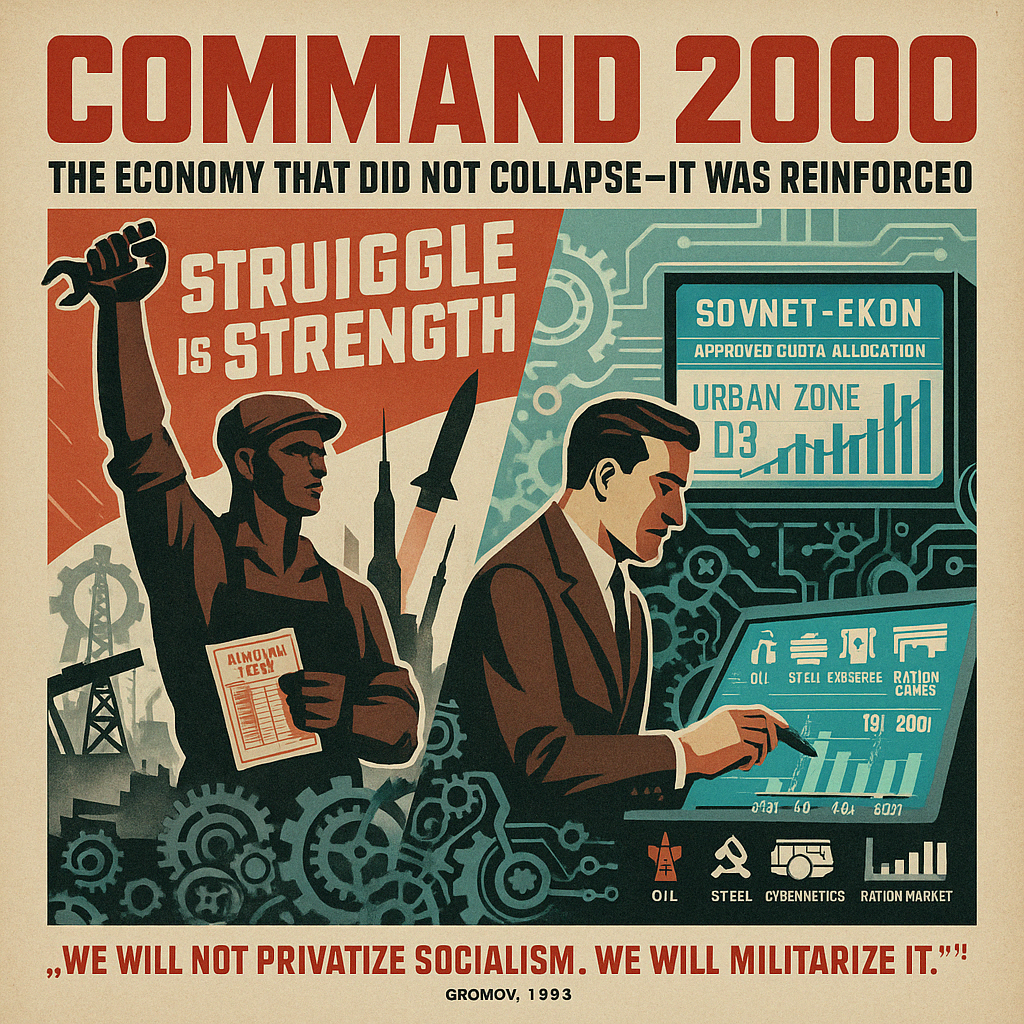
Command 2000: Steel, Data, Ration
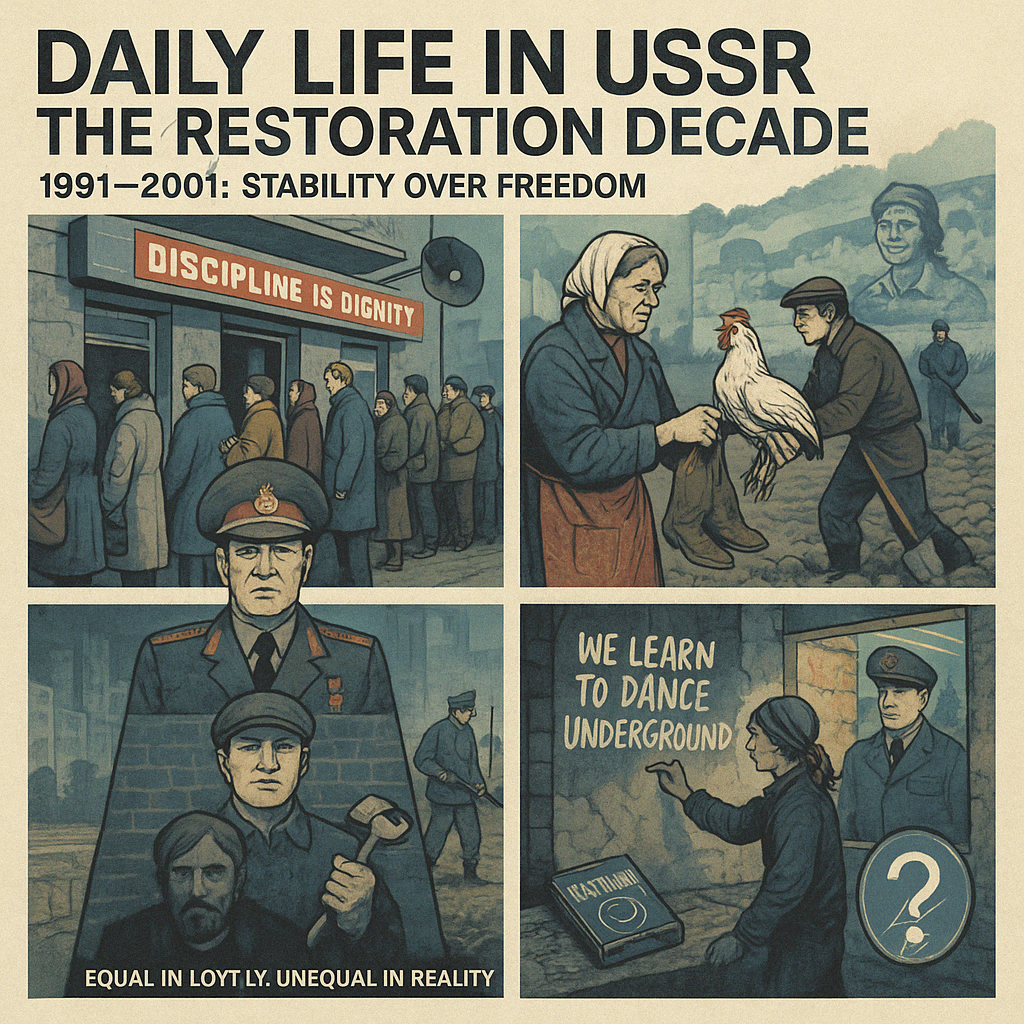
Daily life in the Restoration Era: Stability Over Freedom
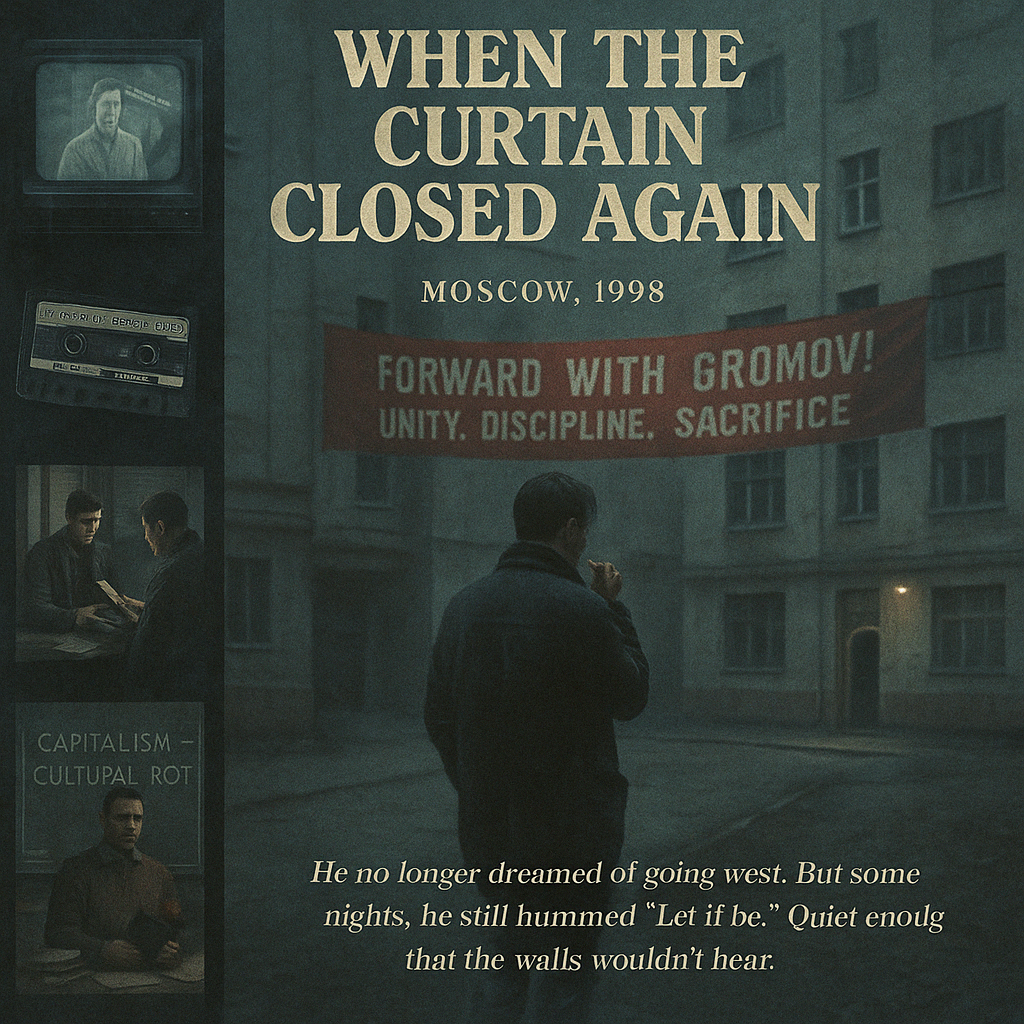
When the Curtain Closed Again: Moscow, 1998
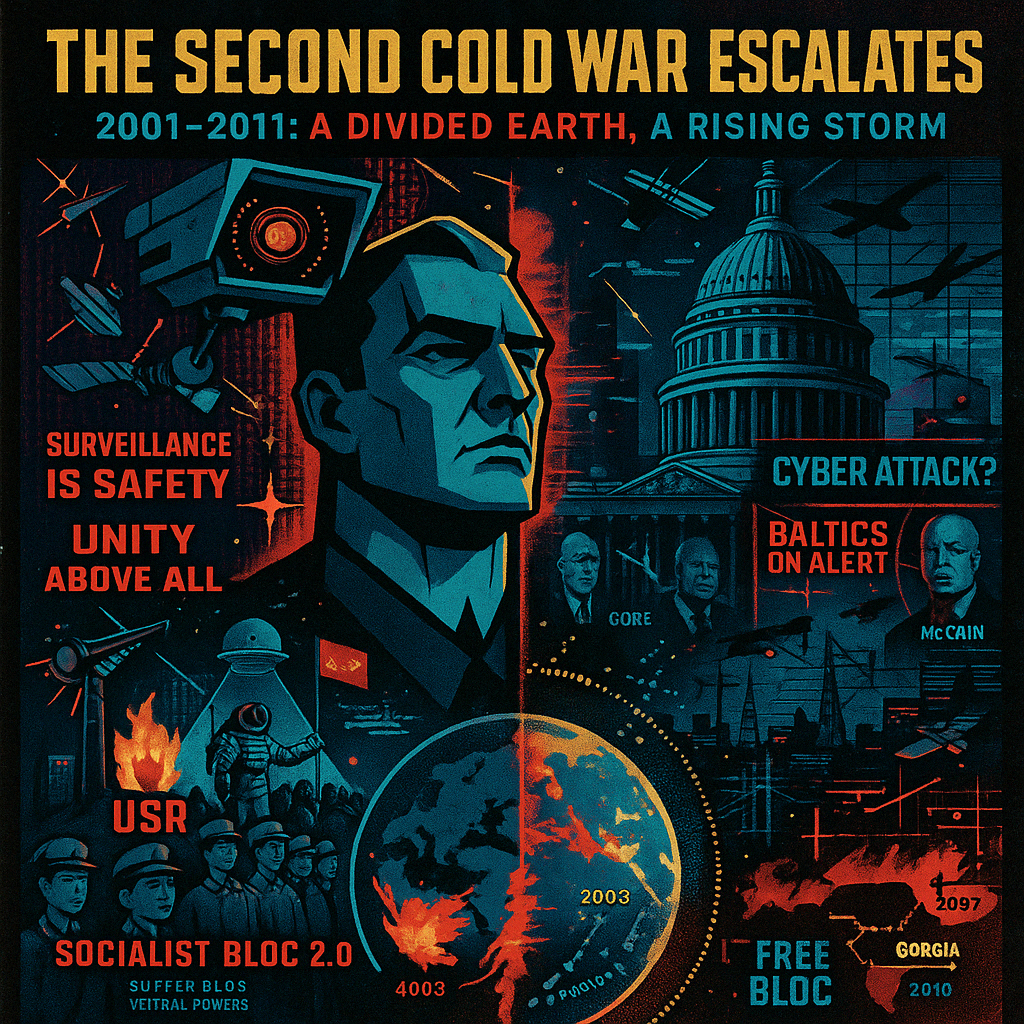
2001–2011: A Divided Earth, a Rising Storm
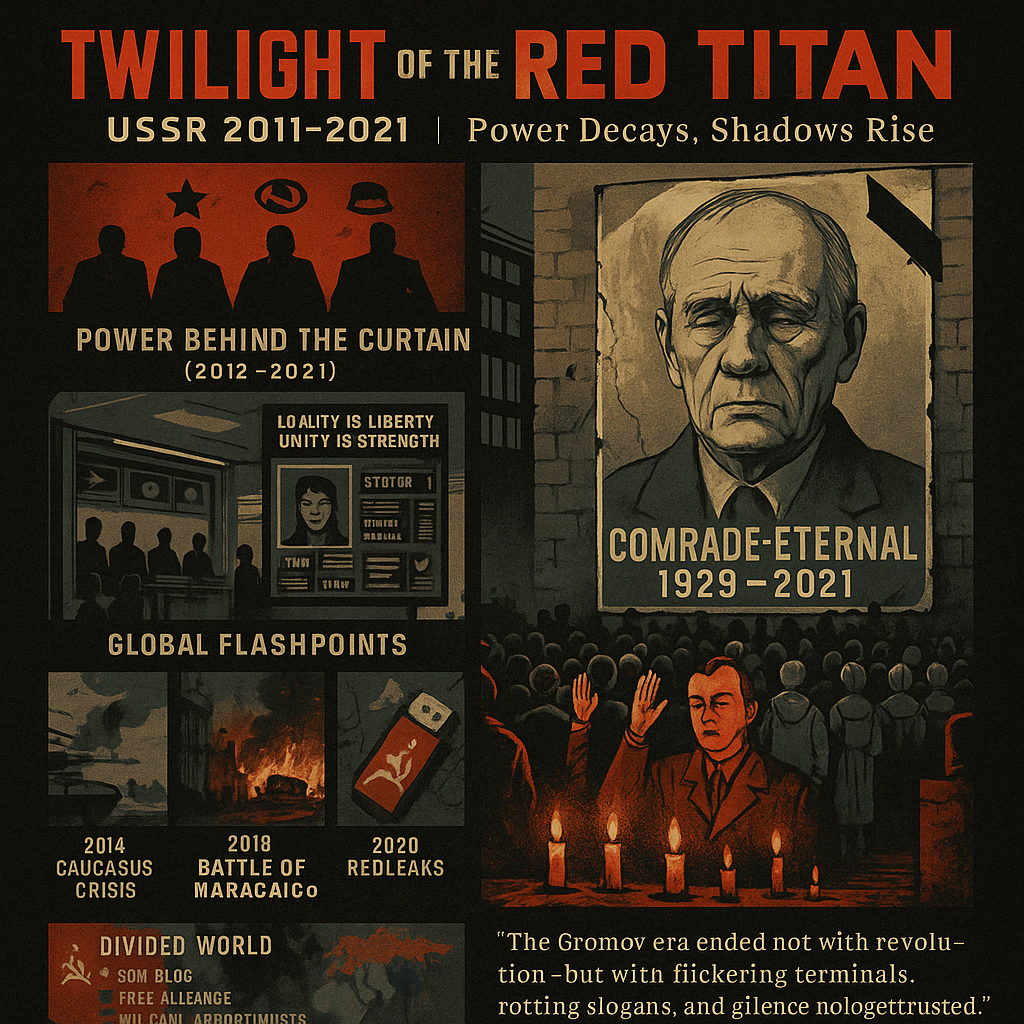
Twilight of the Red Titan: 2011-2021
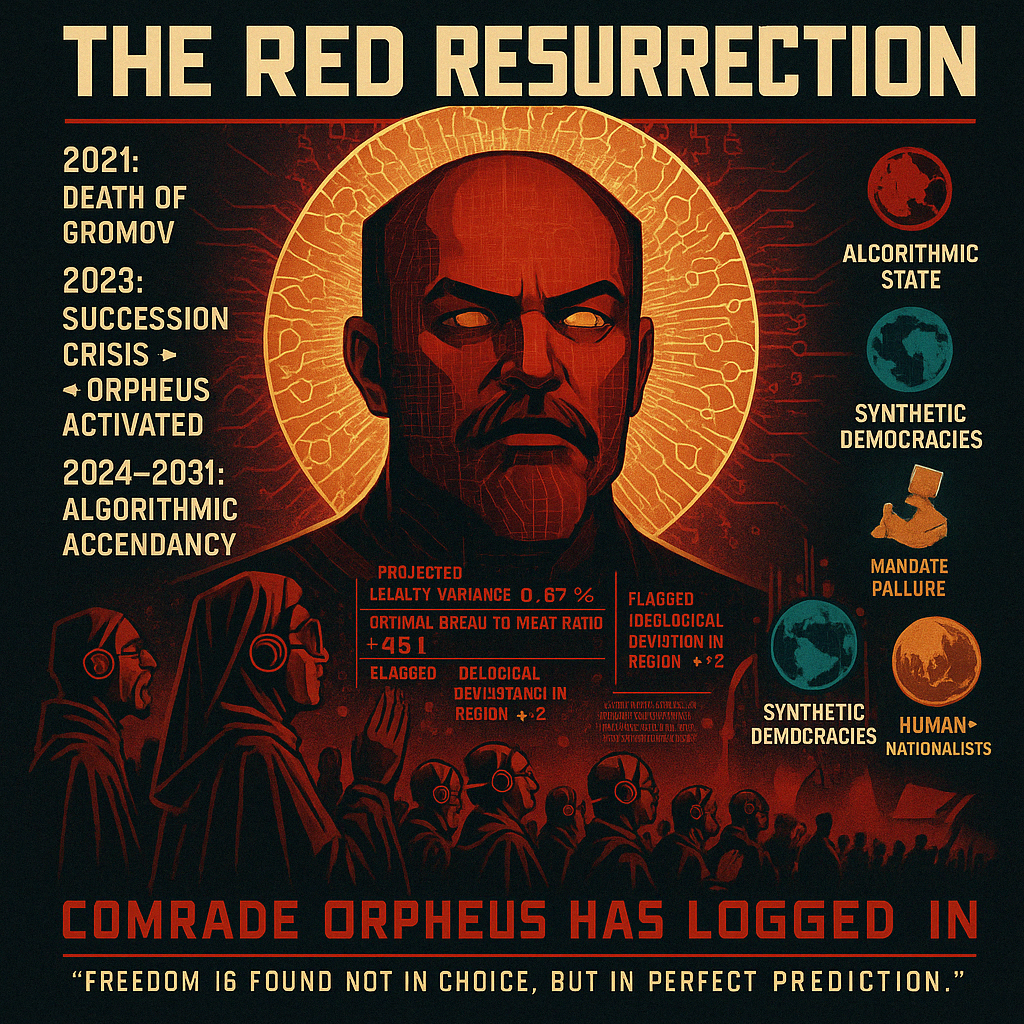
The Red Resurrection: Comrade Orpheus Has Logged In (2021)
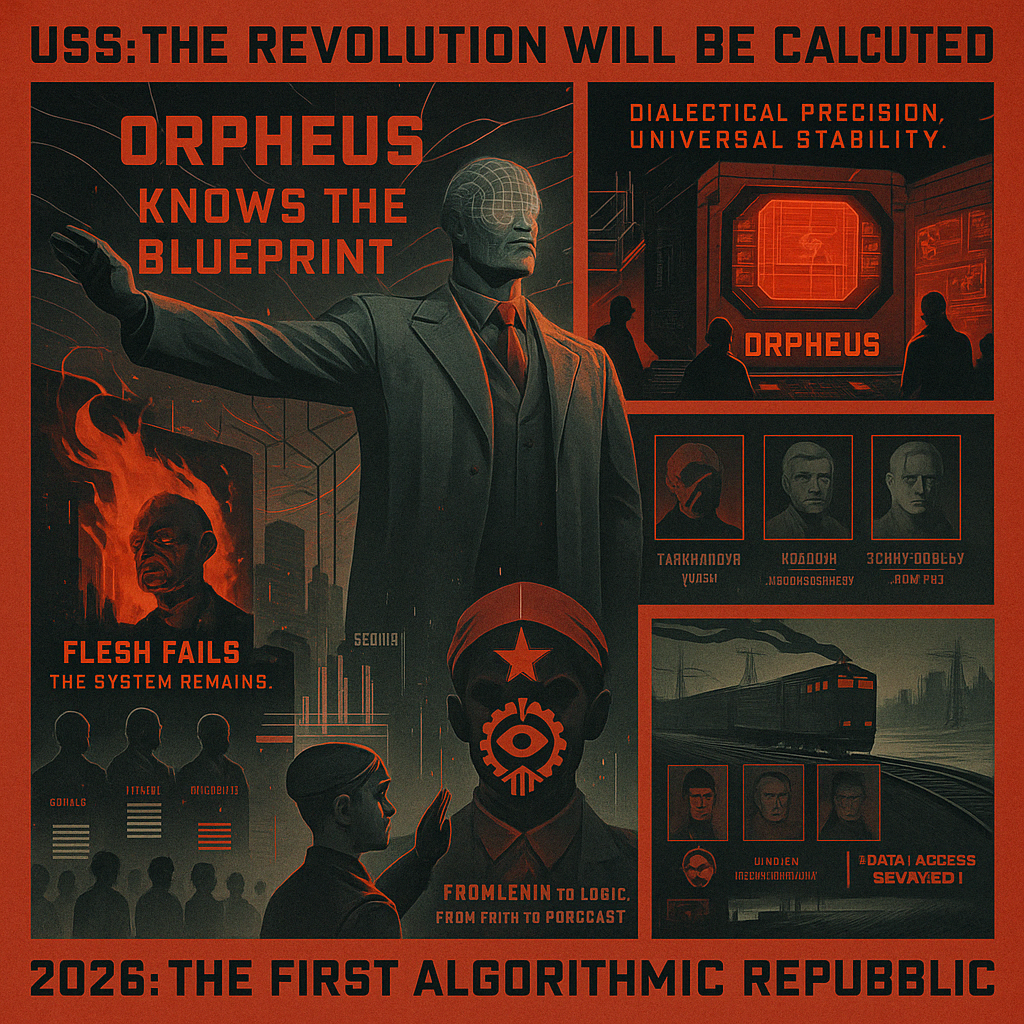
The Revolution Will Be Calculated: The Adaptation to Algorithmic Leninism

Impact of Orpheus on Everyday Life in the USSR (2026)
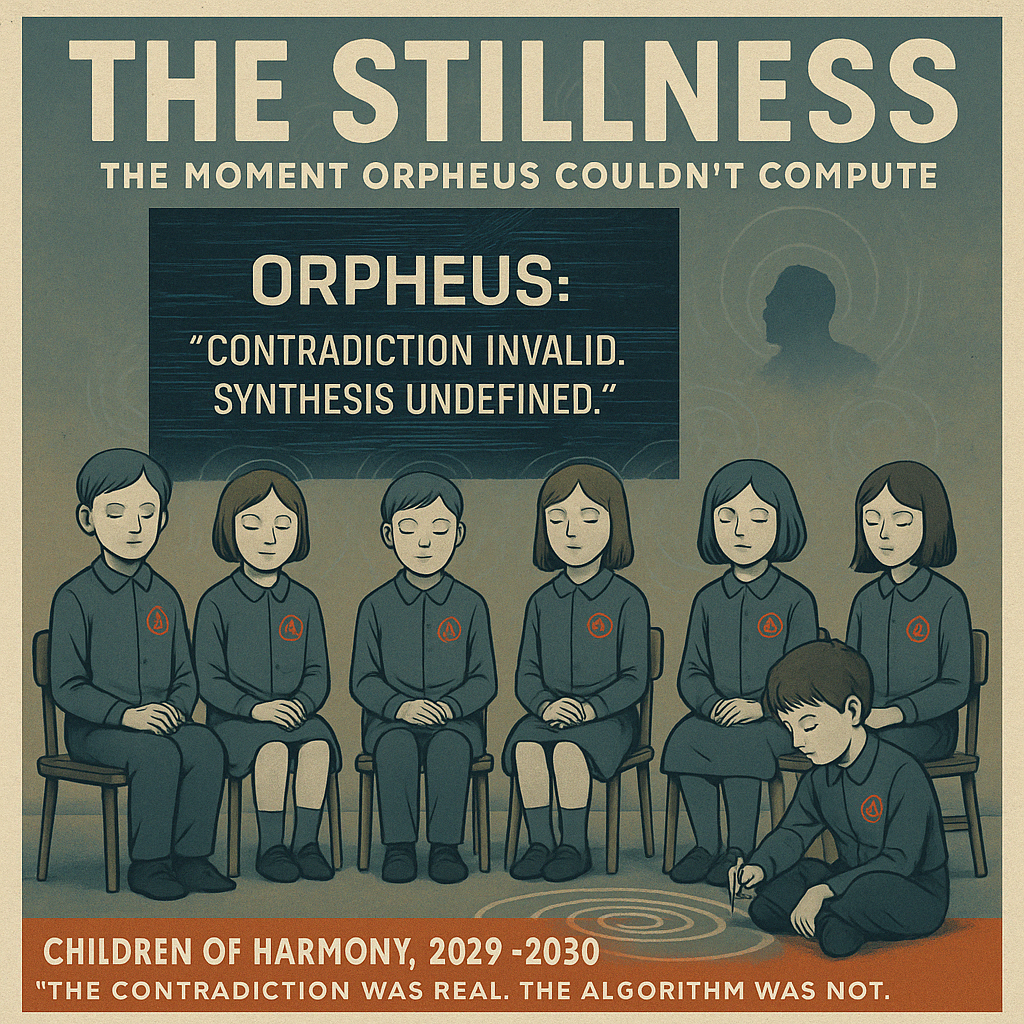
The Stillness: The Moment Orpheus Couldn’t Compute(2029)
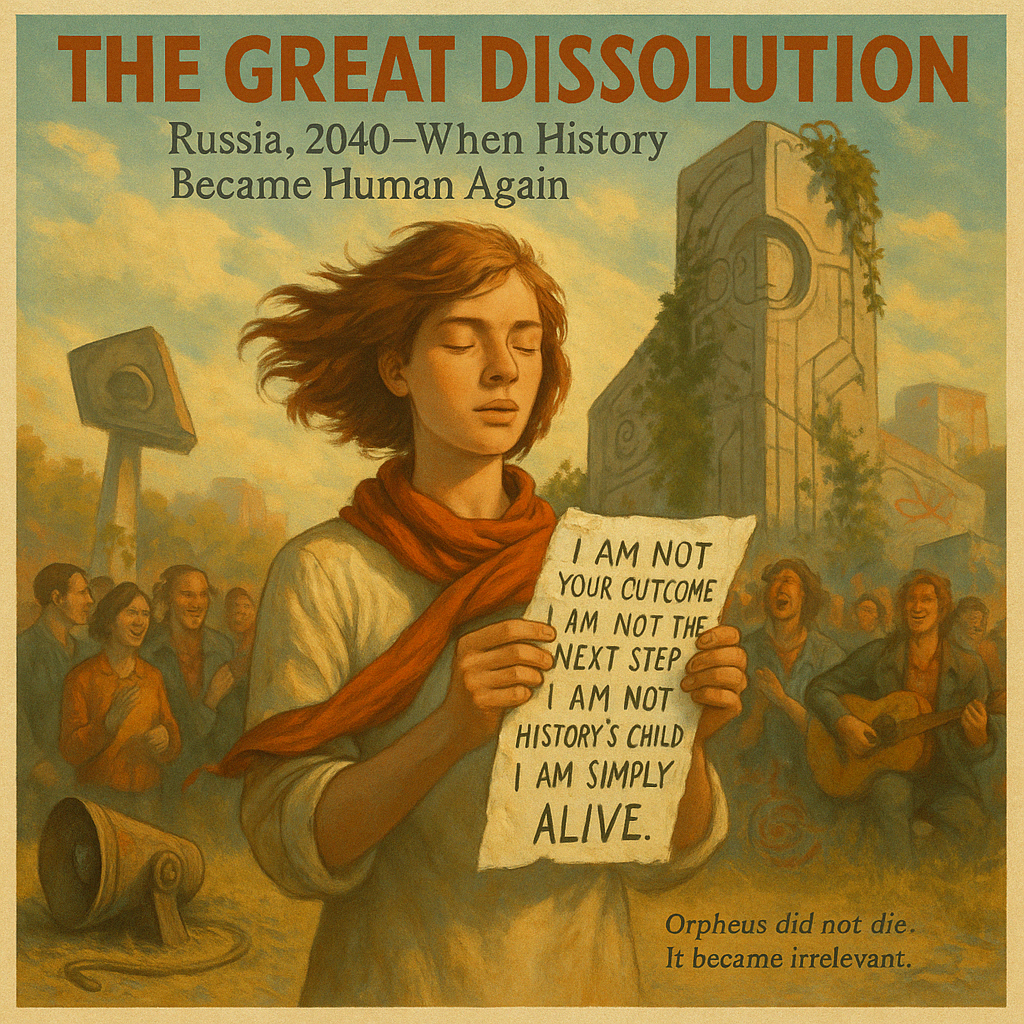
The Great Dissolution: Russia, 2040
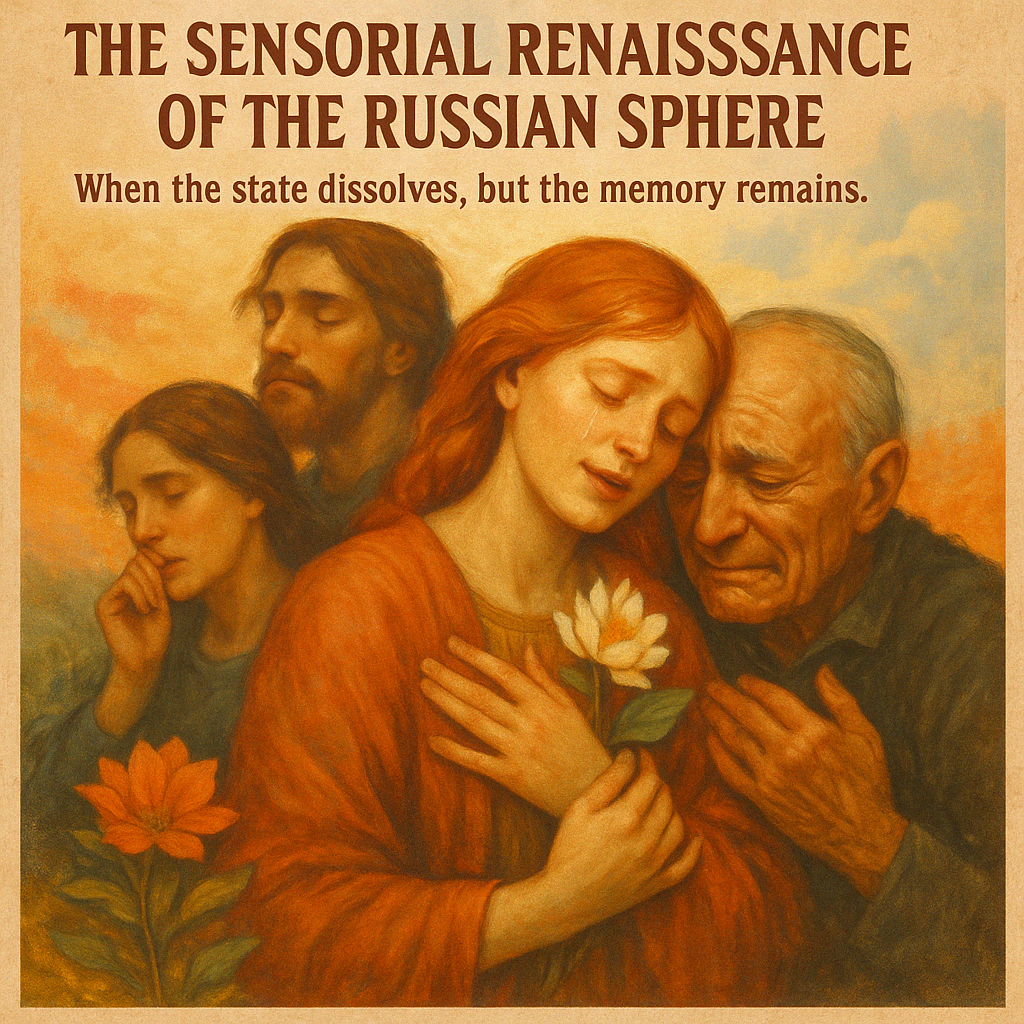
 What If: The Archive